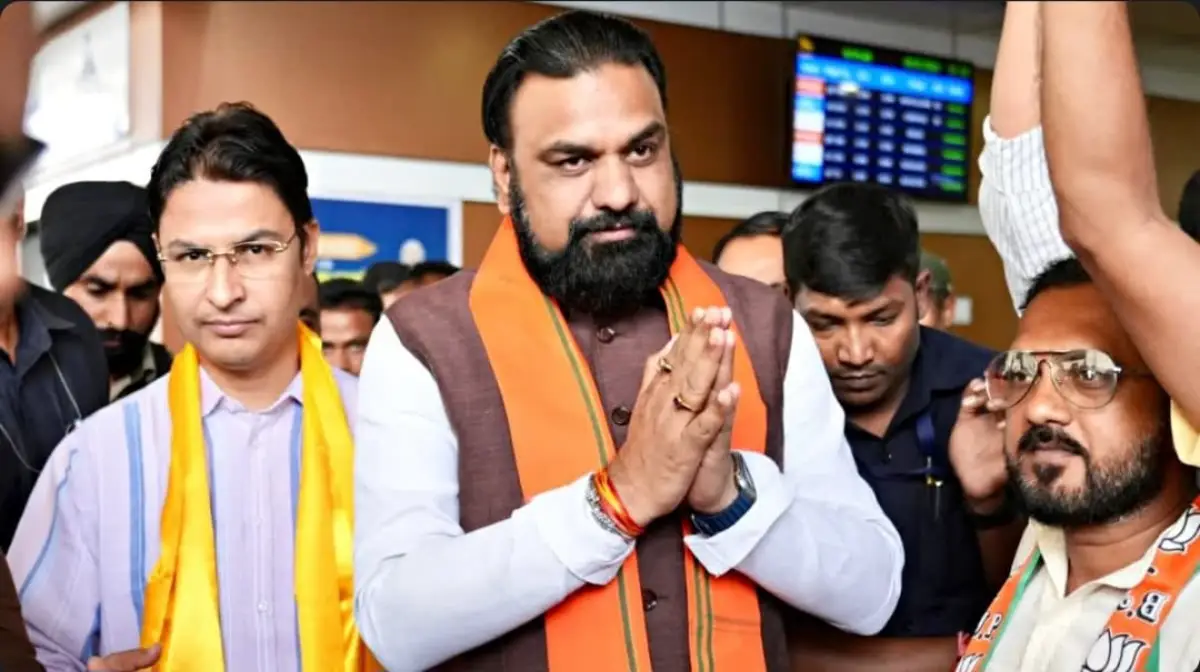
Bihar Deputy Chief Minister Samrat Choudhary . Photo: Neeraj Kumar
By Alok Mohit
Patna: Bihar Chief Minister Nitish Kumar resigned on Tuesday, bringing to a close a nearly 21-year-long tenure that reshaped the State’s governance landscape while also being marked by frequent political realignments.
The move signals the end of an era that saw Bihar transition into one of the faster-growing States, even as it opens the door for the first BJP-led government in the State.
In a day of swift political developments, Nitish Kumar submitted his resignation to Governor Syed Ata Hasnain at Lok Bhavan after chairing his final Cabinet meeting, where he informed colleagues of his decision.
Soon after, the Bharatiya Janata Party moved swiftly to elect senior leader Samrat Choudhary as the leader of its legislature party, effectively clearing the way for him to become Bihar’s next Chief Minister. Choudhary, currently Deputy Chief Minister and MLA from Tarapur, is expected to take oath on Wednesday in Patna.
His name was proposed by Deputy Chief Minister Vijay Kumar Sinha, along with senior BJP leaders Mangal Pandey, Dilip Jaiswal and Renu Devi, and endorsed by central observer Shivraj Singh Chouhan. With his elevation, the BJP is set to have its first Chief Minister in Bihar.
In his initial remarks, Choudhary described the responsibility as a “sacred opportunity” and said he would work with dedication and integrity, adding that the governance model established under Nitish Kumar would continue to serve as a guiding framework.
In a post on social media platform X, Choudhary wrote, “This is not merely a position for me, but a sacred opportunity to serve the people of Bihar, to fulfil their trust and dreams. I pledge to live up to the expectations of one and all with complete dedication, commitment, and integrity.”
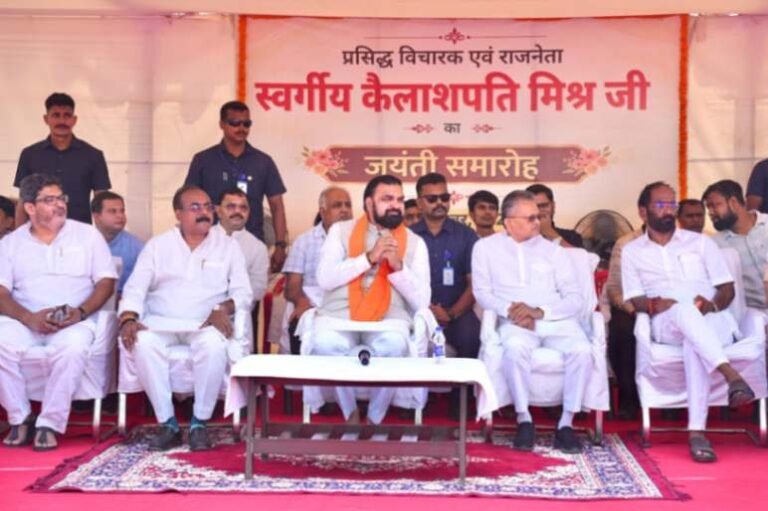
Later in the day, a meeting of National Democratic Alliance (NDA) legislators formally backed the BJP’s leadership. The alliance enjoys a comfortable majority in the 243-member Assembly, ensuring a smooth transition of power.
Soon after stepping down, Nitish Kumar Kumar shared a detailed message on social media platform X, reflecting on his long tenure and the work done by his government. He wrote:
“You know that on November 24, 2005, the NDA government was formed in the state for the first time. Since then, the rule of law has prevailed in the state, and we have been continuously engaged in development work. From the very beginning, the government has worked for the development of all sections of society—whether Hindu, Muslim, upper caste, backward classes, extremely backward classes, Dalits, or Mahadalits—everyone has been included.
Work has been done in every sector, be it education, health, roads, electricity, or agriculture. Significant efforts have also been made for women and youth. In recent times, the pace of work has been further accelerated. For the next five years, from 2025 to 2030, the ‘7 Nischay-3’ programme will lead to even more development work and help Bihar progress significantly.
The state is also receiving full support from the central government. For this, I express my gratitude to the Honourable Prime Minister, Shri Narendra Modi. Bihar will develop even faster, become one of the top states in the country, and make a significant contribution to national progress.
We have done a great deal of work for the people of Bihar and have continuously served them over the years. I have decided that I will now step down from the post of Chief Minister, and accordingly, after today’s cabinet meeting, I met the Honourable Governor and submitted my resignation.
Now, a new government will take charge of the state. I will extend my full support and guidance to the new government. Going forward, even better work will be done, and Bihar will continue to move ahead. I thank everyone sincerely and extend my best wishes.”
Kumar’s political journey has been both influential and complex. First sworn in on November 24, 2005, he returned to power with a stronger mandate in 2010, building his image around governance reforms, infrastructure expansion, and improved law and order. Under his leadership, Bihar made notable strides in growth and public service delivery.
His tenure was also marked by shifting alliances—breaking with the BJP in 2013, forming Mahagatbandhan (Grand Alliance) with the RJD-Congress combine in 2015, returning to the NDA in 2017, switching again in 2022, and eventually rejoining the BJP-led alliance. These shifts earned him both praise for political adaptability and criticism from opponents.
About the Author
Alok Mohit is a senior journalist based in Patna with decades of experience in mainstream journalism. He has previously served as Senior News Editor at Hindustan Times, Patna, and later at Hindustan Times, Chandigarh, where he played a key role in shaping news coverage and editorial direction. Known for his in-depth understanding of socio-political issues and strong editorial judgement, he continues to contribute insightful analysis and reporting on matters of public interest.
About the Author