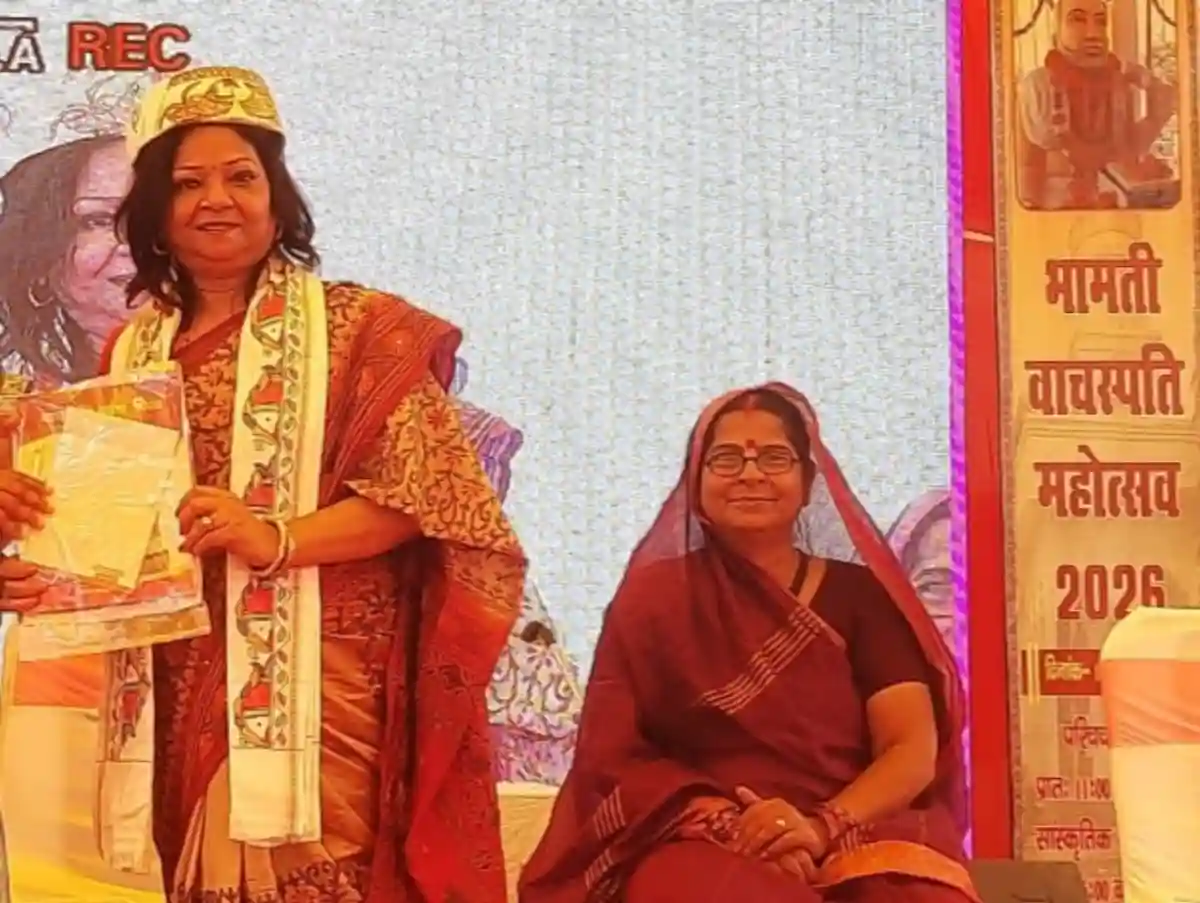
Bhamati Vachaspati Mahotsav 2026
By A Correspondent
Patna: Women’s participation in cottage industries in the Mithila region took centre stage at the Bhamati Vachaspati Mahotsav 2026, held at Andhratharhi in Madhubani district. The event was organised jointly by the Art and Culture Department of the Bihar Government and the district administration, in collaboration with the Pt Vachaspati Mishra Memorial Construction Committee, to mark the birth anniversary of the 9th–10th century philosopher Pt Vachaspati Mishra.
The discussion focused on the theme “Women’s Participation in Mithila’s Cottage Industries”. Introducing the subject, committee chairman Ratneshwar Jha said Andhratharhi village is also associated with Bhamati, the wife of Pt Vachaspati Mishra. He noted that the scholar, deeply influenced by her service and dedication, named his most significant work after her. “It is therefore essential to discuss women’s issues at this forum,” he said.
Jha emphasised that women in Mithila have been playing a vital role in cottage industries. Traditional food products once prepared at home are now being commercialised by women. He added that women have also begun online marketing of terracotta and bamboo craft items used in weddings and other occasions, while the market for Mithila paintings has expanded significantly.
Mithila artist Rani Jha observed that women in the region had started participating in cottage industries long ago, even when they spun sacred threads using traditional tools.
Senior journalist and art writer Reena Sopam said that when women skilled in household work began earning income from homemade food products, their work naturally evolved into business. However, she noted that women in other parts of the state were also engaged in similar activities. What distinguishes Mithila, she said, is that women transformed the region’s traditional painting into a full-fledged industry, giving a new dimension to cottage enterprises.
“Paintings once created on the walls of homes during weddings are now transferred onto cloth and paper and brought to the market. This uniqueness sets Mithila women apart,” she said, adding that Mithila art now enjoys both national and international markets.
Sharing her personal experience, Sopam said she had always seen painting as an integral part of life in Mithila. “But when artworks displayed in our home began attracting the attention of Indian and foreign visitors, and they showed interest in buying them, I realised the commercial potential of this art. It became clear that this could address the region’s economic challenges,” she said. Decades later, she noted, that vision has materialised, with many families now sustaining themselves through this art form, bringing prosperity to the region.
However, she pointed out that no comprehensive study has yet been conducted on the contribution of these women entrepreneurs to Mithila’s economy, stressing the need for research and proper documentation. “Not just narratives of struggle, but success stories must also be recorded,” she added.
Sopam further said that there is a growing demand, led by Ratneshwar Jha and others, to develop a “Vedang Circuit” in Bihar, as Andhratharhi is the native place of Pt Vachaspati Mishra, the author of Bhamati, and several other philosophers were born nearby. She urged the state tourism department to consider developing such a circuit.
Expressing concern, she said the Vachaspati site in the village is in poor condition and appealed to the state government and district administration to develop it as a tourist destination.
On the occasion, Dr Vidyanath Jha presented a PowerPoint highlighting women’s participation in Mithila’s cottage industries. The subsequent session featured discussions on culture and art, followed by Maithili and Sanskrit poetry recitals. The evening concluded with various cultural programmes.
The event was conducted by Raghav Jha, while District Art Officer Nitish Kumar, along with Dheeraj Mishra and Sant Kumar, played key roles in organising the programme.
About the Author