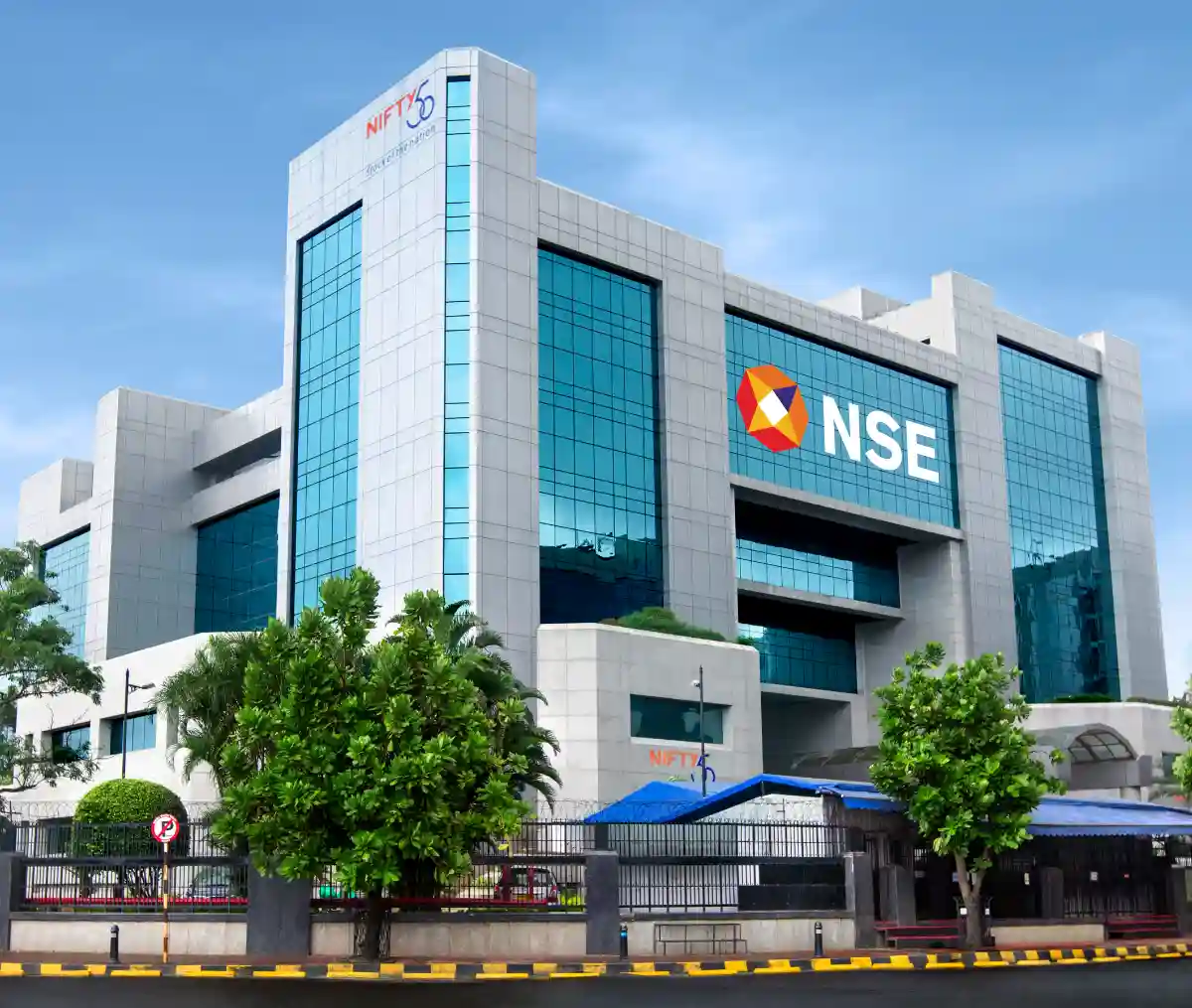
NSE India. Photo: Wikipedia
Mumbai: The National Stock Exchange (NSE) of India’s initial public offering (IPO) closed on September 21, 2026, with bids worth approximately Rs 90,000 crore at the upper price band. The Rs 22,561.57 crore issue was subscribed 5.71 times overall, making it the most subscribed among India’s five largest IPOs by issue size.
The NSE received bids for 50,58,11,384 shares against 8,86,42,911 shares on offer, according to data from the BSE. The subscription figure was driven by qualified institutional buyers, whose reserved portion was subscribed 12.68 times.
Subscription Details
The non-institutional investor category was subscribed 6.55 times, with bids for 123.8 million shares against a reserved quota of 18.9 million shares. Within this segment, bids from high net-worth individuals above Rs 10 lakh were subscribed 7.78 times, while smaller non-institutional bids of Rs 2-10 lakh were subscribed 4.09 times.
The retail individual investor portion ended at 1.39 times subscription, with bids for 61.3 million shares against a reserved quota of 44.1 million shares. The retail category had remained below full subscription through much of the bidding period before improving on the final day.
The employee reservation portion was subscribed 2.4 times, with 1.03 million shares bid for against 433,000 shares reserved.
Anchor Investors
NSE raised Rs 6,746.18 crore from 189 anchor investors on September 16, a day before the IPO opened for public subscription. The exchange allocated 3,77,93,739 equity shares at Rs 1,785 per share.
Life Insurance Corporation of India received the largest individual allocation with 22,42,584 shares worth Rs 400.30 crore. LIC’s ULIP Growth Fund and New Pension Plus Growth Fund also participated in the anchor book.
Other prominent anchor investors included Government Pension Fund Global with an allocation worth Rs 250 crore, while the Monetary Authority of Singapore and Abu Dhabi Investment Authority-Monsoon were each allocated shares worth Rs 200 crore. Fidelity, Goldman Sachs, Morgan Stanley, BNP Paribas, Societe Generale, HSBC, Vanguard and Eastspring Investments also participated.
With 189 anchor investors, NSE ranks second behind Hyundai Motor India’s 224 anchor investors in the historical comparison. Zomato follows with 186 investors.
Issue Structure
The NSE IPO was entirely an offer for sale by existing shareholders, comprising up to 12.64 crore equity shares. The price band was fixed at Rs 1,700 to Rs 1,785 per share. The minimum lot size was 8 shares, requiring a minimum investment of Rs 14,280 for retail investors at the upper price band.
The issue opened for public subscription on September 17 and closed on September 21. The basis of allotment is expected to be finalised on September 22, with shares tentatively scheduled to list on the BSE on September 24.
Comparison with Large IPOs
The NSE issue is the second-largest IPO in India by issue size, behind Hyundai Motor India’s Rs 27,858.75 crore offering in October 2024. However, the NSE IPO’s 5.71 times subscription exceeds the subscription levels of the other four largest IPOs.
Hyundai Motor India was subscribed 1.93 times. Life Insurance Corporation of India’s Rs 20,557.23 crore issue in May 2022 was subscribed 2.05 times. One 97 Communications’ Rs 18,300 crore IPO in November 2021 was subscribed 1.48 times, and Tata Capital’s Rs 15,511.87 crore offering in October 2025 was subscribed 1.65 times.
The NSE IPO has delivered India’s largest-ever retail allocation in absolute value, worth over Rs 7,800 crore, according to CNBC TV18.
Rahul Sharma, Head of Research at Equity99, said the subscription establishes strong demand and institutional interest, but the post-listing rerating will ultimately depend on derivatives-volume trajectory, transaction revenue, earnings growth and the valuation investors are willing to pay for NSE’s market dominance.
Mirae Asset Sharekhan noted in a report that NSE is valued at a 2025-26 price-to-earnings multiple of 42.9x, a notable discount to peers like BSE. The brokerage cited the exchange’s 32.1 per cent return on equity and its position to capitalise on India’s long-term capital market growth.
Market watchers said the subdued grey market premium weighed on retail subscription. The premium on NSE shares had fallen to around 2 per cent from a peak of 20 per cent ahead of the IPO.
NSE is India’s largest stock exchange by trading volume and operates the Nifty indices. The exchange runs the trading platform, clears trades, owns the indices and sells market data.
About the Author