Supreme Court of India
By Neeraj Kumar
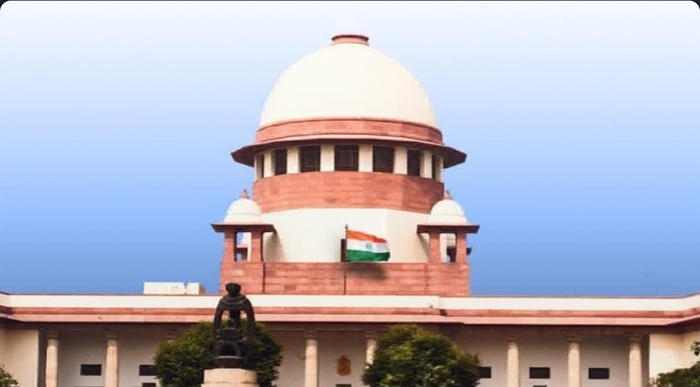
Patna: The Supreme Court on Thursday stayed the implementation of the University Grants Commission’s (UGC) controversial new regulations, following growing anger among students across the country. The rules had drawn criticism for providing safeguards against discrimination only for OBC, SC and ST students, while offering no similar assurance to students from the general category.
Hearing petitions challenging the regulations, the apex court observed that the UGC provisions were “unclear and ambiguous”. As a result, the 2012 regulations will continue to remain in force for the time being.
A joint Bench comprising Chief Justice of India Justice Suryakant and Justice Joymalya Bagchi issued notices to the Centre and the UGC, seeking their responses. The new regulations, notified on January 13, had made it mandatory for all higher educational institutions to constitute Equity Committees to examine complaints of discrimination and promote equity on campuses.
During the hearing, the Chief Justice raised serious concerns over the practical implications of the rules. Citing an example, he asked whether the regulations would be effective if a student from southern India faced derogatory remarks in a northern institution (or vice versa), especially when the caste identities of both the victim and the accused were unclear.
Reflecting on India’s social journey, the CJI remarked, “After 75 years, in one country, whatever we have achieved towards building a casteless society — are we moving backwards? What will happen?” He also strongly opposed the idea of segregated hostels, saying, “For God’s sake, please don’t do this. We have lived in hostels, students lived together. We have even had inter-caste marriages. We must move forward towards a casteless society.”
The Bench warned that failure to intervene could have dangerous consequences, potentially leading to social division with serious long-term effects.
Justice Bagchi supported the petitioner’s argument, noting that the 2012 regulations were broader and more inclusive, as they addressed discrimination at large and even treated ragging as a form of discrimination. He questioned the need for regression in protective laws, stating that the principle of non-regression — developed in environmental law — also applies to legislation safeguarding social justice and equality.
“We must not reach a stage where children are forced into separate institutions, as seen in the United States, where Black children go to different schools and white children to others,” Justice Bagchi observed. “India’s unity must be reflected in its educational institutions.”
The Chief Justice further cautioned that such situations could be exploited by mischievous elements in society.
In its order, the Supreme Court said, “Issue notice, returnable on March 19. The Solicitor General, Tushar Mehta, has accepted notice. Since the issues raised will also have a bearing on the examination of constitutionality in the 2019 petition, these matters shall be tagged together. Meanwhile, the UGC Regulations, 2026, shall remain stayed.”
What the regulations proposed
The UGC (Promotion of Equity in Higher Educational Institutions) Regulations, 2026 mandated that Equity Committees must include representatives from Other Backward Classes (OBC), Scheduled Castes (SC), Scheduled Tribes (ST), persons with disabilities and women. However, the regulations made no mention of representation from the general category.
These rules replaced the UGC Equity Regulations, 2012, which were advisory in nature. In contrast, the 2026 regulations were mandatory.
Petitioners argued that by defining caste-based discrimination strictly as discrimination against SC, ST and OBC communities, the UGC had effectively denied institutional protection and grievance redressal mechanisms to students from general or unreserved categories, who may also face harassment or discrimination based on caste identity.
The regulations sparked protests in several places, with student groups and organisations demanding their immediate withdrawal.
What the dispute is about
The new regulations were framed following earlier Supreme Court directions and were notified on 13 January, making it compulsory for all higher education institutions to form Equity Committees to examine complaints of discrimination and promote equality.
However, the absence of any provision for general-category representation triggered widespread opposition and legal challenges.
Key features of the new UGC rules
An Equal Opportunity Centre (EOC) to be set up in every college.
The EOC to assist disadvantaged and marginalised students in matters related to education, fees and discrimination.
Committees to include members from SC, ST, OBC, women and persons with disabilities, with a tenure of two years.
Every college to form an Equity Committee, headed by the institution’s principal or head.
An Equality Squad to monitor discriminatory practices on campus.
Mandatory meeting within 24 hours of receiving a discrimination complaint.
Report to be submitted to the college head within 15 days.
Further action to begin within seven days.
The EOC to submit reports every six months.
A national monitoring committee to be set up by the UGC.
Grants may be withheld for violations.
Annual reports on caste discrimination to be submitted to the UGC.
In serious cases, UGC recognition may be cancelled.
Degree, online and distance-learning courses may be suspended.
With the Supreme Court’s interim stay, the controversial 2026 regulations will remain on hold until further hearing.
About the Author