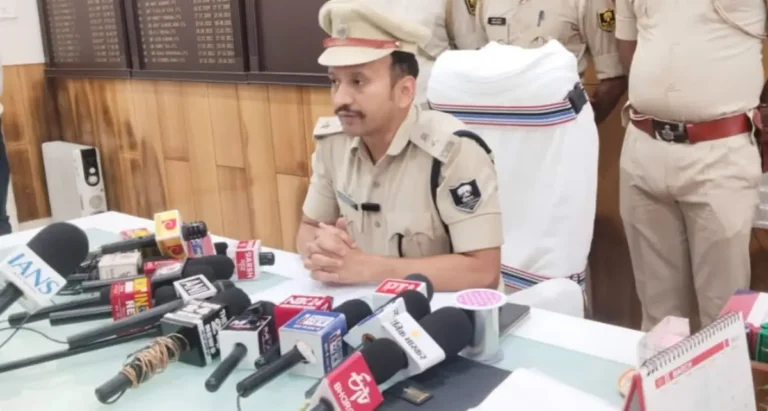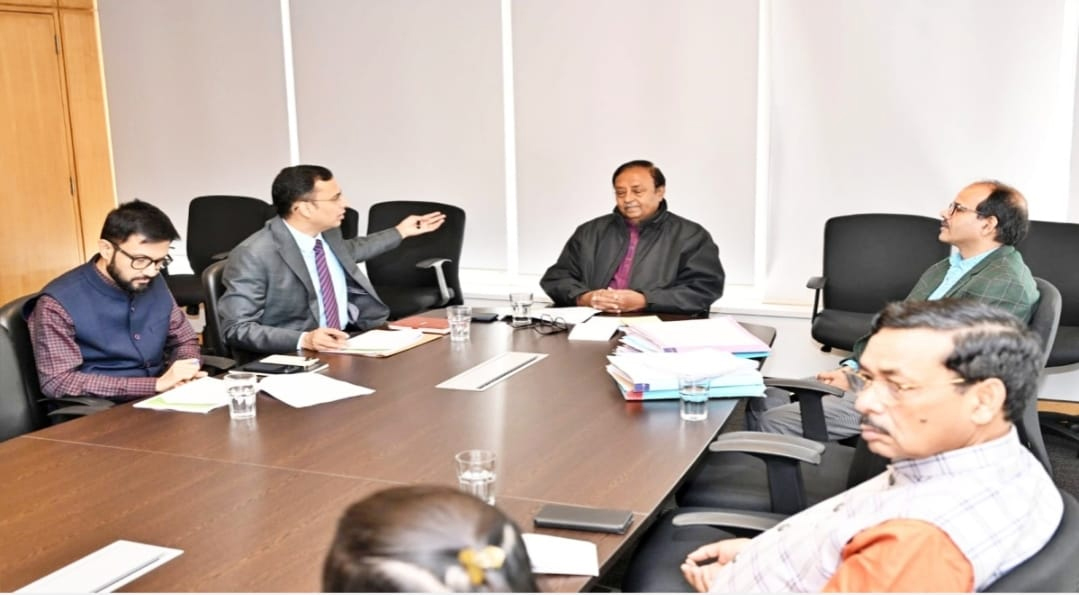
Bihar Energy Department Secretary and Chairman-cum-Managing Director of Bihar State Power Holding Company Limited, Manoj Kumar Singh, along with NBPDCL Managing Director Rahul Kumar, give a detailed presentation on the project
From Neeraj Kumar
Patna: A key review meeting on the proposed Energy Museum (Power Museum) in Patna was held on Thursday to assess the project’s progress, timelines and agency selection. The meeting was chaired by Anjani Kumar Singh, Adviser to Chief Minister Nitish Kumar and Director General of the Bihar Museum.
The primary objective of the meeting was to ensure that the country’s first dedicated Energy Museum is completed on time and developed in line with modern standards. Senior officials, including Bihar Museum Additional Director Ashok Kumar Sinha, Chief Engineer (Civil) of the Power Holding Company Manmohan Kumar, Executive Engineer Ashish Kumar and other officers, were present.
During the high-level meeting, Bihar Energy Department Secretary and Chairman-cum-Managing Director of Bihar State Power Holding Company Limited, Manoj Kumar Singh, along with NBPDCL Managing Director Rahul Kumar, gave a detailed presentation on the project. The presentation covered the proposed design, construction plan, required resources and forthcoming phases. The technical aspects of the museum and its construction were also discussed at length.
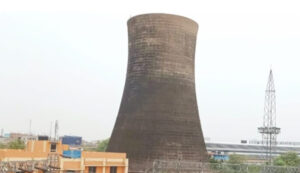
The Energy Museum will be developed on around three acres of land at the defunct old thermal power plant premises in Karbighiya, Patna. The plant has remained closed for several years. The project will be implemented by the Bihar State Power Holding Company.
Designed as a blend of modern technology and industrial heritage, the museum will be India’s first and the world’s fourth dedicated Energy Museum. The project is estimated to cost around ₹200 crore.
The museum aims to promote academic research, preserve India’s energy heritage and give a new boost to technical tourism. It will showcase the complete journey of energy, from its early history to contemporary technologies. Special focus is being placed on children and youth, with interactive and digital formats planned to simplify complex energy processes.
Visitors will experience a unique collection ranging from vintage equipment to the latest energy technologies. DC models, interactive displays, digital panels and 3D models will explain the power generation process, alongside rare generators, engines and historic power-related machinery.
An open-air theatre equipped with 3D technology will also be developed within the campus to narrate the story of electricity generation in an engaging manner. This facility is expected to be particularly appealing to children, combining education with entertainment.
The museum will also house an educational centre where research activities, workshops and training programmes related to energy will be organised. This centre will offer students, researchers and engineering professionals a significant platform to work on future energy solutions.
The proposed Energy Museum in Patna is seen as a major step towards preserving the nation’s power history while strengthening energy education and tourism at both state and national levels.
Electricity generation in Patna dates back to 1930, when construction of the power house began. However, due to rapid population growth and urban expansion in areas such as Karbighiya, Jakkanpur, New Market, Kankarbagh and Chiraiyatand, its operations were halted in 1934. The historic power house has remained closed since then. In 2019, the proposal to convert the site into an Energy Museum received official approval.
About the Author