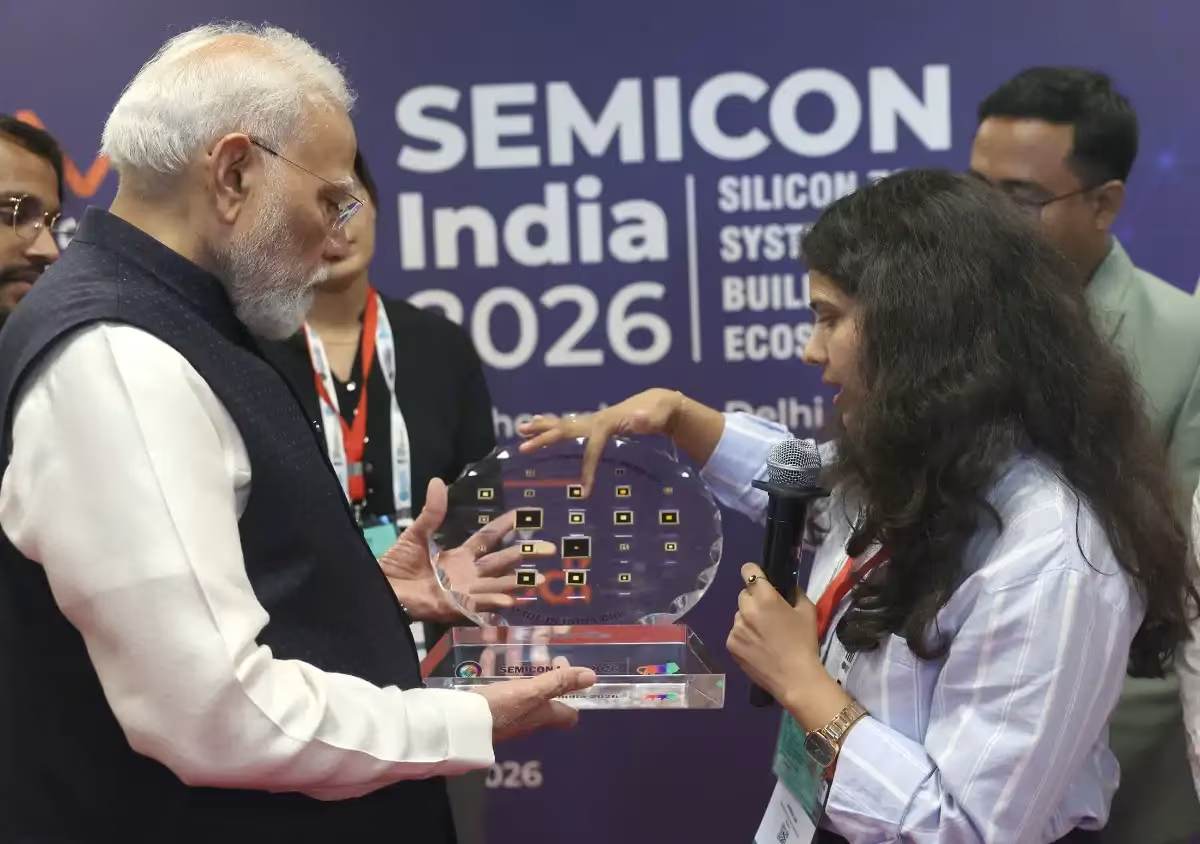
Prime Minister Narendra Modi at SEMICON India 2006 event in New Delhi. Photo: PIB
New Delhi: Prime Minister Narendra Modi inaugurated SEMICON India 2026 on 17 September at Yashobhoomi in New Delhi. The three-day conference and exhibition, held from 17 to 19 September, is organised on the theme ‘Silicon to Systems: Building the Ecosystem’.
The event brings together more than 600 exhibitors, including 300 international companies, across 15,000 square metres. Representatives from 52 countries, over 400 executives and more than 150 speakers are participating in the fifth edition of the conference.
India Enters Second Phase of Semiconductor Mission
Addressing the gathering, Modi said India has entered the second phase of its semiconductor journey. He stated that the country has achieved in four years what the world generally takes a decade to accomplish.
Modi announced a target of USD 13.5 billion for the second phase of the India Semiconductor Mission. The first phase was valued at approximately USD 8 billion.
‘When a country like ours succeeds in a critical industry, it strengthens the global supply chain—a fact that has become even more significant at a time when supply chains are being weaponized,’ Modi said. ‘We should view these transformations taking place in India through this broader perspective.’
Modi said India is preparing itself to serve as a reliable manufacturing hub. ‘The semiconductor industry is facing numerous challenges. Amidst these challenges, the world is in dire need of new and reliable manufacturing hubs, and I say this with full responsibility. I assure you that India is continuously preparing itself for this role,’ he said.
The Prime Minister also highlighted the government’s focus on developing young talent for the sector. ‘Our government has set a target to train 1 lakh engineering students for the semiconductor industry, and we have already trained over 70,000 of them,’ Modi said. ‘I call upon the youth—whether they are conducting research in India or abroad—to come forward and participate in the development of advanced technology here.’
Commercial Production Begins at Two Facilities
Modi marked the start of commercial production at CDIL Semiconductor’s facility in Mohali, Punjab, and Suchi Semicon’s unit in Palsana, Gujarat. He said chips manufactured in India would be supplied to global markets. ‘This year, we are talking about the commercial production of our chips. India’s chips will go out to the world,’ Modi said.
The Suchi Semicon facility is an Outsourced Semiconductor Assembly and Test (OSAT) unit established with an investment of Rs 868 crore. The plant has a proposed production capacity of 1 billion chips per annum. Its target applications include power electronics, analog ICs and industrial systems.
CDIL has established an assembly, testing, marking and packaging facility in Mohali. The expansion will produce high-power discrete devices such as MOSFETs, IGBTs, Schottky Barrier Diodes and transistors using silicon and silicon carbide technologies.
Modi urged fabless companies to retain intellectual property in India. ‘In India, I want fabless companies to grow, and I also want the IP to remain,’ he said. He also called upon equipment manufacturers and suppliers of chemicals and industrial gases to use the incentives offered by the government.
Semicon 2.0 Scheme Notified
The Union Cabinet approved Semicon 2.0 on 15 July 2026 with an outlay of Rs 1,27,500 crore. The scheme advances the next phase of India’s semiconductor programme through six strategic pillars.
The six pillars cover chip design, machines and materials, setting up more fabs, strengthening the ATMP and OSAT industry, research and development, and talent development. Projects supported under the scheme will generally have a duration of up to six years.
The India Semiconductor Mission will act as the nodal agency for Semicon 2.0. The scheme aims to support at least 200 chip design startups and companies in India.
Under the Semicon India Programme, the Union government has approved 12 semiconductor projects with an investment pipeline of approximately Rs 1.64 lakh crore. Three approved units under Semicon 1.0 have commenced commercial production.
Electronic design automation tools have been extended to more than 400 academic institutions and 105 startups. Twenty-four startups have secured approvals under the Design Linked Incentive scheme.
Industry Participation and Exhibition Highlights
The exhibition floor features six country pavilions representing Japan, South Korea, Malaysia, the Netherlands, Singapore and Sweden. Twelve state government pavilions are also part of the event.
Key global and domestic enterprises participating in the exhibition and strategic roundtables include ASML, Applied Materials, Teradyne, Infineon, Ebara, Jabil, IBM Research, NXP, Tata Electronics, Micron, Merck KGaA, Rapidus, Lam Research, CG Power, Uno Minda, Advantest and Tokyo Electron.
The event features a new ‘Sand to Silicon to Systems’ Value Chain Experience. This provides visitors with an integrated view of the semiconductor ecosystem, showcasing the journey from materials and equipment to fabrication and systems.
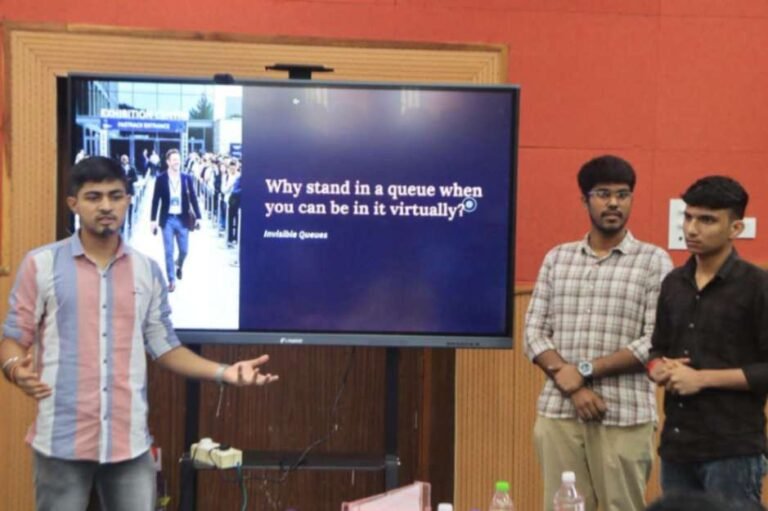
A Startup Pavilion showcases around 40 startups. A Workforce Development Pavilion provides a platform for talent, skills and career opportunities in the microelectronics sector. A Student Hackathon and Women’s Forum are also part of the programme.
Modi also highlighted infrastructure developments, including the operationalisation of around 3,000 kilometres of Dedicated Freight Corridor. He said the development would improve the movement of goods across the country, strengthen logistics and provide further support to manufacturing.
SEMICON India 2026 continues until 19 September at Yashobhoomi Convention Centre in New Delhi.
About the Author