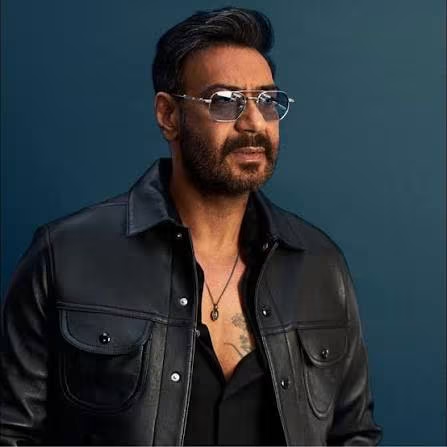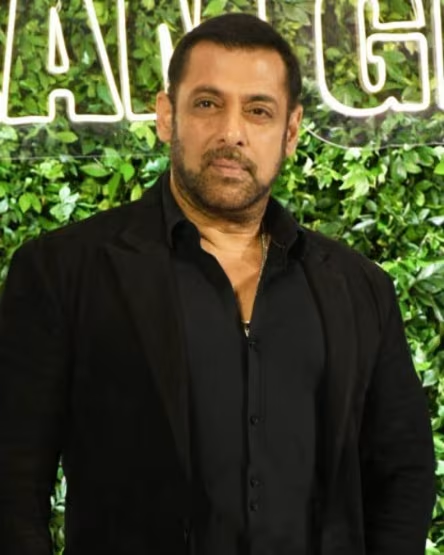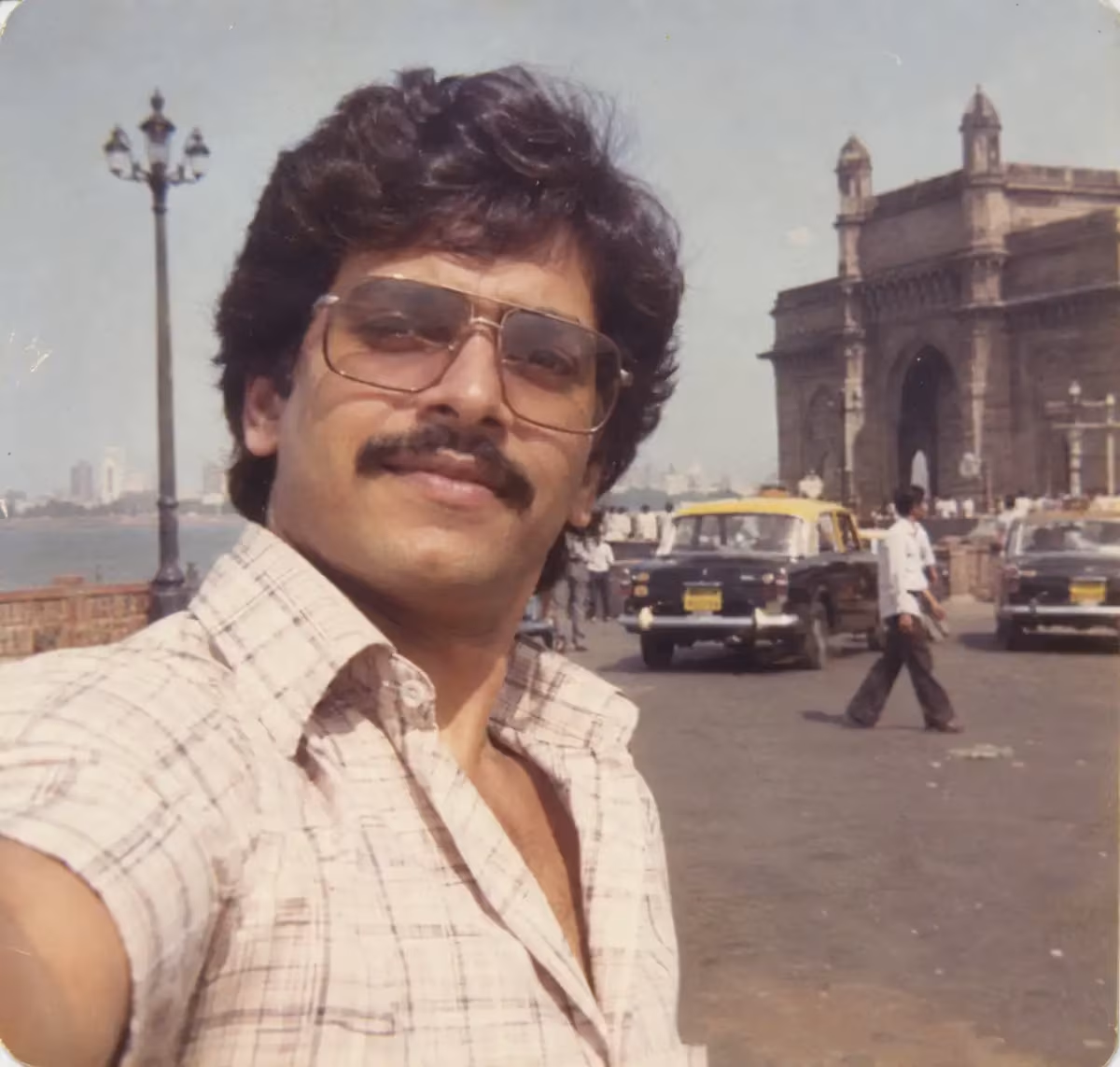
1980s selfie. AI image
Patna: Millions of social media users have uploaded personal photographs to ChatGPT over the past week to generate AI-powered portraits styled as 1980s versions of themselves. The trend has spread rapidly across Instagram, X, and TikTok, with public figures including Indian Commerce Minister Piyush Goyal and former cricketer Irfan Pathan participating.
The format allows users to upload a current selfie and receive an image that preserves their facial features while replacing clothing, hair, and background with period-specific aesthetics such as teased hair, neon lighting, and vintage film grain. Google Trends listed the trend as a top search this week.
Cybersecurity researchers and privacy advocates have raised concerns about the permanent surrender of facial biometric data involved in the trend. Environmental analysts have also pointed to the energy and water demands of the data centers that process the images.
OpenAI has not disclosed how many images were generated through the 80s prompt specifically. The company previously reported that more than 700 million images were created by 130 million users in the first week after its image generator launched in March 2025.
How the trend works
The process is straightforward. Users open the Images section of the ChatGPT app and select a style option that includes the 80s trend. The app displays a preset prompt that instructs the model to preserve the user’s identity, facial features, skin tone, and age while reimagining hair, clothing, and surroundings with mid-1980s styling.
The standard prompt reads: ‘Using my uploaded photo, show me what I would have looked like around 1985. Preserve my identity, facial features, skin tone, age, and recognizable appearance. Reimagine my hair, clothing, accessories, and surroundings with bold, unmistakably mid-1980s styling—expressive silhouettes, statement accessories, layered details, distinctive colors, and textures. Make it feel like a genuine 1985 photograph with analog grain, faded color, direct flash, and subtle softness. Add a period-accurate 1980s red-orange date stamp in the lower corner. No modern objects or text.’
Users can also modify the prompt to generate Bollywood film stills, Stranger Things-inspired portraits, or 1980s music album covers. The trend follows previous viral AI photo formats including Studio Ghibli-style images and Disney character transformations.
Privacy and biometric data risks
Privacy experts warn that uploading a clear photograph to an AI platform transfers more than a simple image file. The upload can include facial geometry, skin tone, background details, and location clues. Major AI systems by default may use uploaded images to train future versions of their software.
A cybersecurity researcher at the University of Alabama at Birmingham explained that the model studies biometric details like eye color and hair color that have value beyond a retro filter. A researcher at Counterpoint Research described these trends as a steady stream of free biometric data feeding AI systems.
Once facial data is processed and absorbed into a system’s core memory, users lose the practical ability to delete it. Leaked biometric data can be exploited to construct deepfakes, bypass security systems, authorize financial fraud, or impersonate individuals in video scams.
The Electronic Privacy Information Center has outlined potential risks including protest policing, political repression, and wrongful identification or arrest.
Precautions include turning off model training permissions in account settings, avoiding photos that show documents or other identifiable people, and stripping location metadata before uploading. However, the speed and spontaneity that make viral trends appealing work against these protective measures.
Environmental cost of AI image generation
Each AI-generated image requires computation in data centers that consume electricity and water. Estimates of energy use per image vary by model and resolution, but even low-end figures add up when multiplied across a viral trend.
Research from Hugging Face and Carnegie Mellon University found that a single image generation can use around 0.01 kilowatt hours of energy, roughly half of a smartphone battery charge. Other studies measuring newer diffusion models found energy use ranging from a fraction of that up to several times higher.
The International Energy Agency has estimated that data centers could consume more than twice as much electricity by 2030, with AI as a major driver. A 2025 study in Nature Sustainability estimated that AI-related water demand could reach 4.2 to 6.6 billion cubic meters of water withdrawal annually by 2027.
In 2024, data centers produced roughly 180 million tonnes of indirect carbon dioxide emissions from electricity consumption. Under the IEA’s base case, this could rise to around 300 million tonnes by 2035.
Almost half of data centers are located in regions of water stress, a proportion expected to rise as data loads increase and global temperatures climb.
Public figures and global spread
The trend has crossed into political and celebrity circles. Indian Union ministers Piyush Goyal, Kiren Rijiju, and Assam Minister Ashok Singhal have shared their retro AI avatars on social media. Former cricketer Irfan Pathan also participated.
The trend has spread across South Asia, the United States, the Middle East, and Europe. Users in Pakistan, Bangladesh, and India have adopted the format, often customizing prompts to reflect regional film and fashion aesthetics from the 1980s.
In Bangladesh, social media feeds have filled with AI-generated portraits featuring acid-wash denim jackets, bold eyeliner, and curly hair, with users describing the trend as a blend of technology and nostalgia.
The current trend echoes earlier viral AI photo formats. The Studio Ghibli-style image trend in March 2025 was so popular it overwhelmed OpenAI servers and prompted threats of legal action on intellectual property grounds. Studio Ghibli co-founder Hayao Miyazaki described AI replication of art as ‘an insult to life itself.’
As of September 2026, the 80s photo trend continues to circulate on Instagram and X, with new users joining daily. OpenAI has not issued a public statement on the specific trend or its data handling practices related to uploaded images.
About the Author