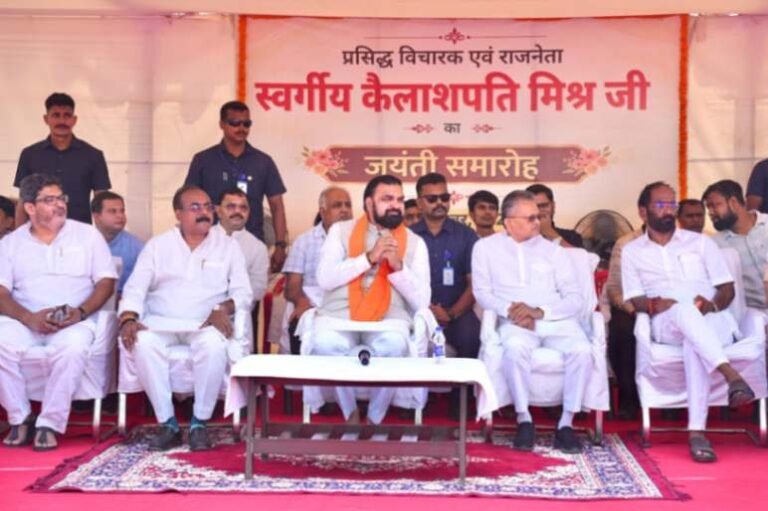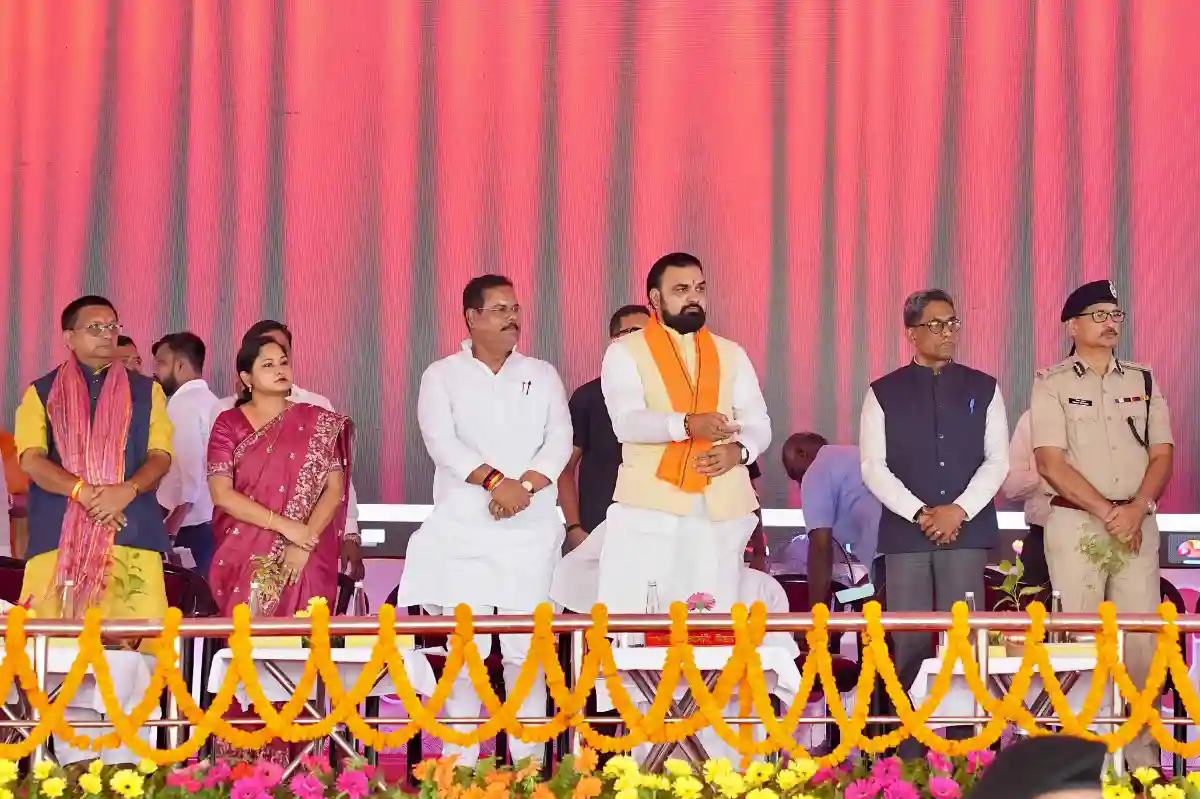
Bihar CM Samrat Choudhary Transfers ₹1,233.87 Crore Social Security Pension to 10.56 Lakh Beneficiaries at a function organised in Haveli Kharagpur, Munger, on September 10, 2026. Photo: Aftab Alam Siddiqui
Munger: Bihar Chief Minister (CM) Samrat Choudhary on Thursday transferred ₹1,233.87 crore through Direct Benefit Transfer (DBT) to the bank accounts of 10.568 lakh beneficiaries under the state’s social security pension scheme for August 2026. Each beneficiary received a monthly pension of ₹1,100. A total of 98,896 new beneficiaries were also brought under the scheme.
The Chief Minister joined the programme organised at Gangta Mor in Haveli Kharagpur, Munger, through video conferencing. During the event, he also inaugurated and laid the foundation stone remotely for the widening and strengthening of National Highway-333 from kilometre 28.340 (Gangta) to kilometre 38.340 (Kohbarwa Mor).
Choudhary said the state government was committed to providing social security to all eligible people without discrimination. Under the social security pension scheme, beneficiaries are being provided ₹1,100 every month.
He said ensuring that pension money reaches beneficiaries’ bank accounts on time was a priority of the government. The 10th of every month has been fixed for pension payments. This month, 98,896 new beneficiaries were added to the scheme.

The Chief Minister said no eligible person should face discrimination on the basis of caste, religion or any other factor. The government’s aim was to ensure that the benefits of its schemes did not remain confined to paperwork but reached the bank accounts of the actual beneficiaries.
Choudhary also stressed the need for better management of water resources in the interest of Bihar. He said important progress had been made towards resolving the 25-year-old water dispute between Bihar and Jharkhand through the efforts of the state government and Union Home Minister Amit Shah.

He said steps needed to be taken for better management of Ganga water from Buxar to Bhagalpur. Efforts would also be made to include provisions in the Farakka Water Treaty to ensure that Bihar receives its share of water whenever required. He also stressed the need to address the problem of silt accumulation in the Ganga up to the Farakka Barrage.
The Chief Minister said the Bihar government’s Environment, Forest and Climate Change Department had initiated a project to widen and strengthen the road from kilometre 28.340 at Gangta to kilometre 38.340 at Kohbarwa Mor on NH-333. The project aims to make the route better, safer and easier for commuters.
Improved road connectivity, he said, would facilitate travel in Munger, Jamui and surrounding areas and accelerate development in the region.

Choudhary said providing better education and adequate opportunities for the children of Bihar remained a priority for the government. Arrangements were being made at Saraswati Vidya Niketan Model School to provide modern facilities and prepare students for competitive examinations.
Through the ‘Bihar Vidyarthi Saathi App’, efforts were also being made to provide students with academic support round the clock. He said the government was continuously working to ensure that the children of Bihar progressed in education, employment and entrepreneurship and built a prosperous future.
“I will not step back from the work you have assigned me,” he said, adding that the government’s objective was not merely to formulate schemes but to ensure that their benefits reached the last person in society.
He said the real identity of development would emerge only when its benefits reached the last person. “When every individual becomes strong, society becomes strong, and only then will Bihar become strong,” he said.
The Chief Minister said 13 districts of Bihar were affected by floods, with more than 30 lakh people affected. Relief and assistance work was being carried out by the government.
Referring to the Ganga, he said the river’s water flow from Buxar to Bhagalpur needed to be properly managed. The Ganga becomes considerably wider after entering Bhagalpur from Buxar, and corrective measures were necessary to provide relief from floods.
Choudhary said under the water treaty with Bangladesh, Bihar could currently use Ganga water only during four months — July, August, September and October. He stressed that Bihar’s interests should be protected in the water agreement so that the state could use Ganga water throughout the year.
Efforts would therefore be made to include a provision in the Farakka Water Treaty allowing Bihar to receive water whenever it needs it, he said.
About the Author