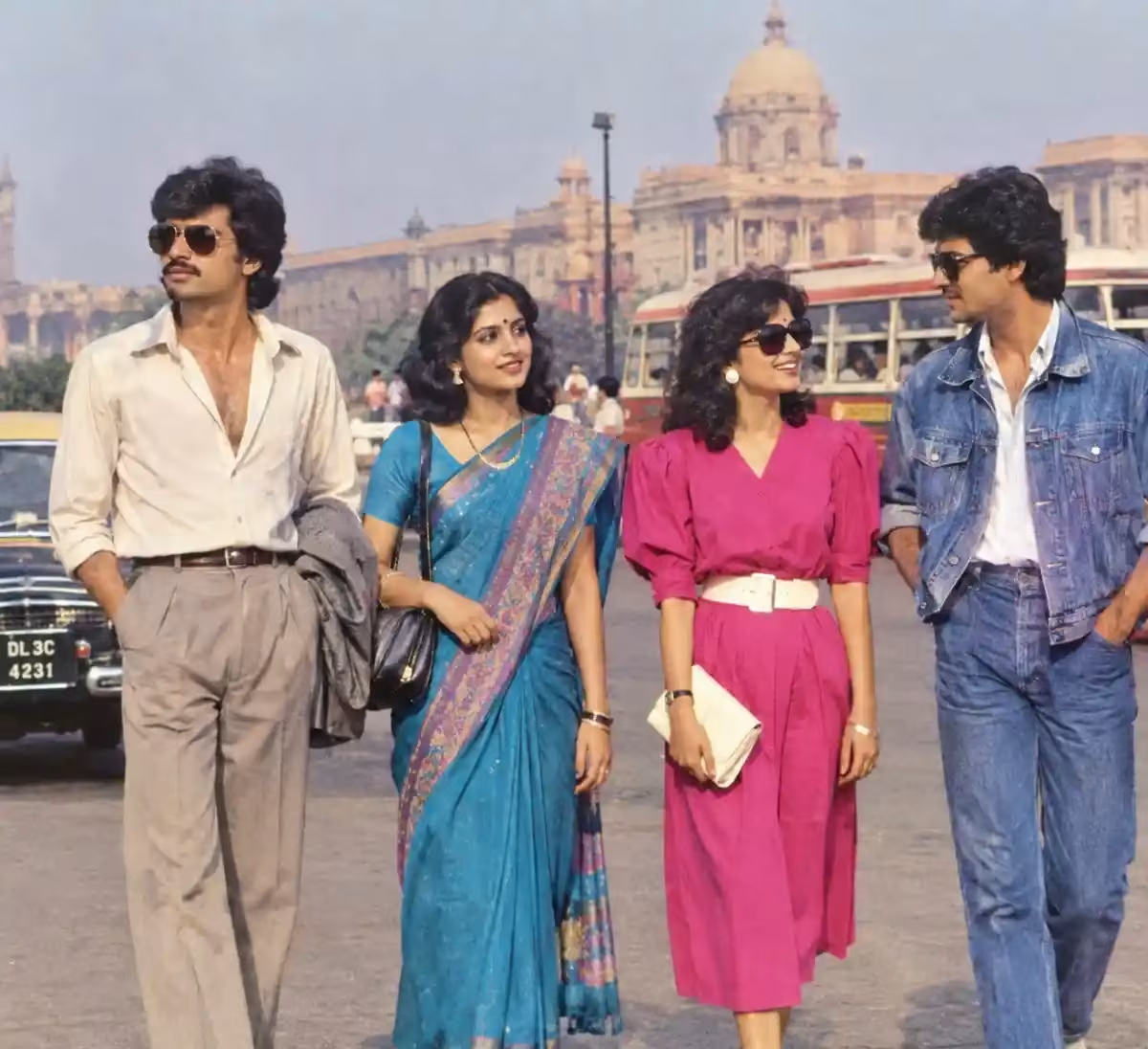
Patna: A growing wave of hyper-realistic artificial intelligence videos is pulling young viewers into an idealized version of the 1980s, creating an online nostalgia for a decade many of them never experienced . This trend, widely referred to as ‘AI nostalgia,’ is powered by tools such as OpenAI’s Sora, Google’s Veo, and Luma AI’s Ray . Accounts like Maximal Nostalgia, Purest Nostalgia, and utopic.dreamer craft soft-focused, cinematic scenes that evoke feel-good movies from the era .
Tavaius Dawson, the 26-year-old behind Maximal Nostalgia, said people raised in the digital age long for a time without constant online pressure . His AI videos celebrate a version of the decade filled with bright colors, big hair, and youthful energy while omitting the darker realities of the 1980s, including the AIDS crisis, widening inequality, and drug epidemics . For some, the clips evoke genuine emotion; Alicia West Fancher, who lived through the 1980s, said the videos moved her to tears and felt surprisingly true to her memories .
This online phenomenon is part of a broader cultural fascination fueled by major entertainment properties. The final season of ‘Stranger Things,’ which began streaming on November 26, 2025, marks the conclusion of a series that has been central to the mainstreaming of 1980s nostalgia . The show is a love letter to the analogue past, stitching together references from Steven Spielberg, Stephen King, and John Hughes, while its synth-heavy score recalls the work of John Carpenter .
Its cultural and economic impact has been significant. Following the show’s fourth season, Kate Bush’s 1985 hit ‘Running Up That Hill’ saw an 8,000% spike in streams, and Kellogg’s Eggo waffles experienced a 14% surge in sales, prompting a limited-edition ‘Eleven’s Mix’ in 2024 . A 2022 Nielsen study found that 60% of the show’s audience was under 35, too young to have experienced the 1980s first-hand . The show’s appeal is not merely about recalling a specific time but about offering comfort through familiar patterns of friendship, adventure, and small-town heroism in a chaotic world .
Psychologists and cultural theorists note that this reflects a timeless human pattern of viewing the past through ‘rose-colored glasses,’ similar to how people once romanticized the 1950s or 1960s . In the early 2000s, music critic Simon Reynolds noted a combination of causes for these cycles: middle-aged people experiencing pangs for the styles of their youth, and a new generation becoming fascinated with the pop culture of their infancy . This presents a longing for something different from the present . In the complicated and morally confusing 1990s, the ‘goofy’ 1970s seemed like fun; by the 2000s, the stylistic extremes of the 1980s attracted people in a time of national challenge .
The current moment shows parallels to the dark undercurrents of the 1980s, including aggressive censorship, apocalyptic conspiracy, and geopolitical panic . Jason C. Bivins, a professor of religion and culture, observes that audiences sense the parallel between the dark ’80s and our own time . He notes that his students, who watch ‘Stranger Things,’ are eager to learn about the ‘satanic panic’ and the Parents Music Resource Center’s (PMRC) ratings system of the 1980s . The show may provide a narrative for contemporary feelings of dislocation and surrealism .
Beyond the screen, the nostalgia is manifesting in fashion and consumer behavior. Brands are embracing the 1980s arcade game aesthetic, or ‘arcade-core,’ with luxury labels opening immersive stores on platforms like Roblox and releasing virtual collections . The vibrant atmosphere of arcades has resurfaced many times over the decades, becoming a defining phenomenon from the 2000s onwards . This strategy allows brands to reach new audiences and engage with communities that are increasingly present in video game spaces .
Despite concerns about the blurring line between history and fiction with AI-generated content, the surge of ‘AI nostalgia’ reveals a deeper cultural longing . In an age of isolation and digital overload, many young people find comfort in a past they never knew, one that AI tools can make vividly, if imperfectly, real .
About the Author