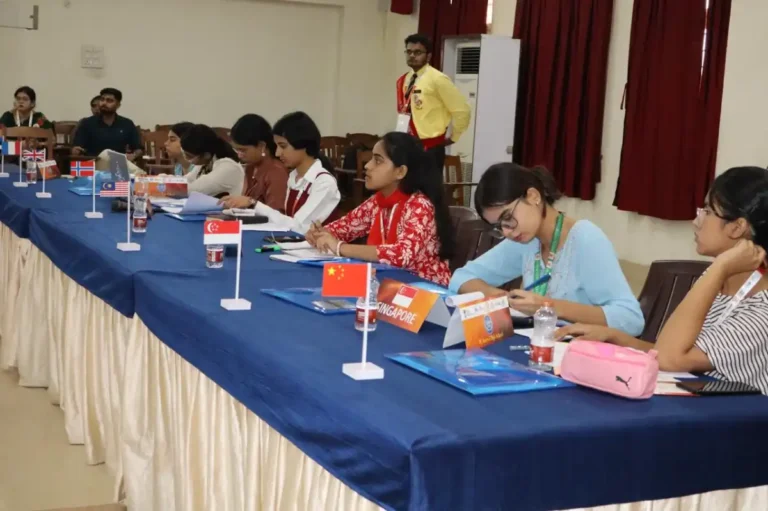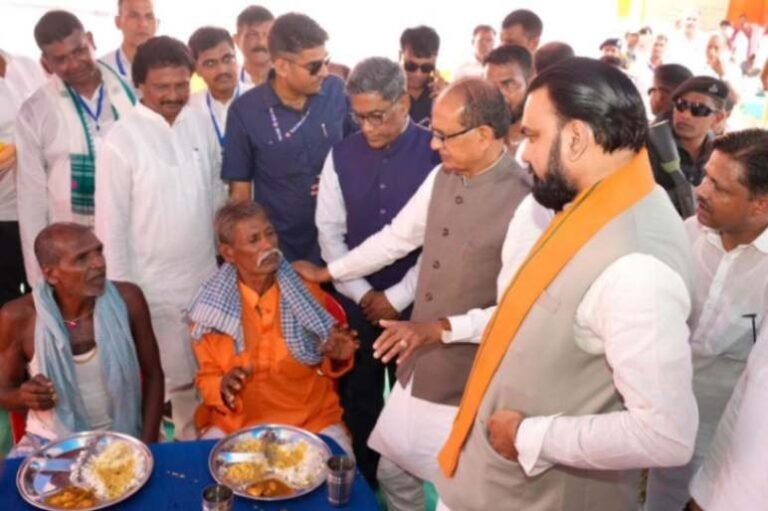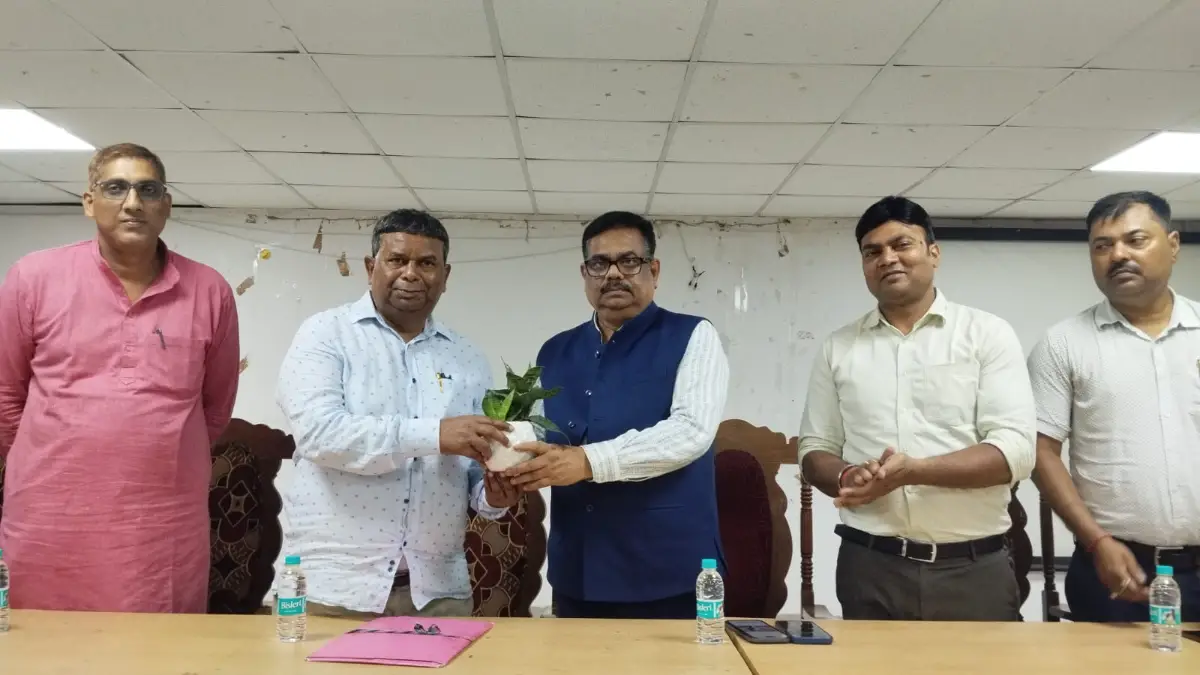
Two significant programmes aimed at fostering personality development, social responsibility, community engagement, and scientific research were held at TPS College on June 4, 2026. Photo: Aftab Alam Siddiqui
By A Correspondent
Patna: Two significant programmes aimed at fostering personality development, social responsibility, community engagement, and scientific research were held at TPS College, Patna on Thursday. The first session featured a Volunteership Orientation Programme organised jointly by the college and Prem Youth Foundation. The second session comprised a one-day training workshop conducted by the Department of Botany and the Internal Quality Assurance Cell (IQAC), focusing on the collection, drying, extraction, solvent selection, and phytochemical screening of medicinal plants.
The orientation programme was chaired by the college principal, Prof. (Dr) Tapan Kumar Shandilya. Addressing the students were Mr Kapil Dev Ram, State Director of Mera Yuva Bharat under the Ministry of Youth Affairs and Sports, government-of-india/" style="color:#c0392b;font-weight:700;text-decoration:underline;" class="hta-topic-link">Government of India; Mr Vinay Kumar, Regional Director of the National Service Scheme (NSS), Bihar; and Dr Mohammad Ali, Internship Coordinator at Patliputra University, Patna.
In his presidential address, Prof. Shandilya explained that under the National Education Policy (NEP) 2020, voluntarism has been made compulsory in the fourth semester of undergraduate studies to nurture social responsibility, leadership skills, and a spirit of service among students. He emphasised that education is not merely a means to secure employment, but a foundation for knowledge, character-building, and social awareness.
He also referred to India’s rich educational heritage, including the legacy of Nalanda and Takshashila universities, the Gurukul system, the philosophy of “Vasudhaiva Kutumbakam” (the world is one family), Macaulay’s education system, and the recommendations of the Kothari Commission, stressing the need to harmonise ancient and modern education.
Mr Vinay Kumar highlighted that volunteering helps develop leadership, discipline, teamwork, and social commitment among young people. He urged students to actively contribute to the development of society and the nation.
Welcoming the participants, Dr Hans Kumar Singh, NEP Coordinator at TPS College, noted that volunteering provides students with valuable opportunities to learn through community engagement and enhance their personalities.
The second session’s training workshop was inaugurated by Prof. Shandilya. The chief guest was Prof. Vinod Kumar, Principal of R.M.W. College, Nawada, while Dr Chandan from Savera Cancer Hospital attended as the guest of honour.
A total of 40 participants, including research scholars from Patliputra University, Magadh University, and B.R.A. Bihar University, took part in the workshop. They received hands-on training in modern techniques related to the scientific handling of medicinal plants, including collection, drying, extraction, solvent selection, and phytochemical screening.
Dr Vinay Bhushan Kumar stated that India’s rich tradition of herbal medicine, when combined with scientific research, could open new avenues in healthcare, pharmaceutical development, and biotechnology. He encouraged researchers to link laboratory-based studies with socially useful innovations.
Prof. Vinod Kumar observed that research on medicinal plants could play a crucial role in addressing future health challenges. Dr Chandan emphasised the importance of integrating traditional medicinal knowledge with modern medical science.
Among those present on the dais were Dr Prashant Kumar, Dr Umesh Kumar, Dr Mukund Kumar, and Dr Ravi Prabhakar. The event also saw the participation of a large number of faculty members, researchers, and students, including Dr Avneet Bhushan, Dr Ankit Kumar, Shivam Parashar, Chandan Kumar, Deepak Mandal, Hriday Narayan Jha, Avinash Sharma, Dilip Kumar, and Prem Kumar.
About the Author