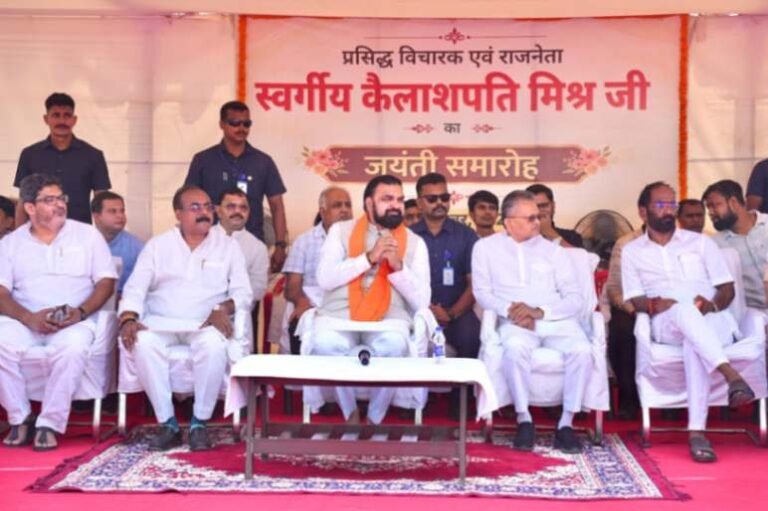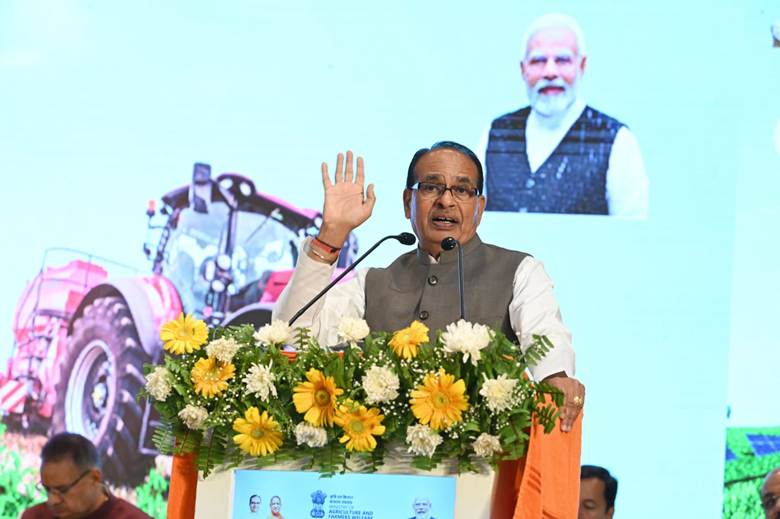
Northern Region Agriculture Conference. Photo: PIB
By A Correspondent
Lucknow: The Northern Region Agriculture Conference, organised by the Union Ministry of Agriculture and Farmers’ Welfare in Lucknow, has emerged as a robust platform for shaping a new vision, action plan and farmer-centric approach to agriculture.
Addressing the inaugural session, Union Agriculture and Farmers’ Welfare and Rural Development Minister Shivraj Singh Chouhan and Uttar Pradesh Chief Minister Yogi Adityanath emphasised that the next phase of agricultural growth would succeed only if scientific research reaches farms, schemes effectively benefit small farmers, and each state prepares a clear roadmap suited to its geographical and climatic conditions.
Mr Chouhan noted that earlier, a single nationwide meeting was held for both Kharif and Rabi seasons, which made in-depth discussions on diverse regional issues difficult. He said the shift towards zonal conferences would enable more focused strategies based on local soil, climate, cropping patterns and challenges.
Describing the northern region as highly significant for agriculture, Mr Chouhan highlighted that while Punjab and Haryana led the Green Revolution, Uttar Pradesh played a major role in foodgrain production. He added that states such as Himachal Pradesh, Uttarakhand and Jammu & Kashmir have distinct strengths in horticulture, fruits, flowers and vegetables, making the conference a vital forum for sharing experiences and framing collective strategies.
The Union Minister outlined three key national goals—food security, enhanced farmers’ income and access to nutritious food. Achieving these, he said, would require increasing production, reducing costs, ensuring fair returns for farmers’ labour, compensating crop losses and promoting agricultural diversification.
Expressing concern over the rising use of fertilisers, Mr Chouhan said it was essential to assess whether consumption was need-based or driven by habit. He stressed the importance of balanced fertiliser use, soil health conservation, natural farming and organic alternatives.
He underlined that quality seeds form the foundation of agriculture and called for greater availability of climate-resilient varieties. Referring to erratic weather and possible low rainfall, he said farming strategies must adapt to changing conditions rather than follow traditional patterns.
Mr Chouhan also flagged the issue of counterfeit fertilisers, pesticides and substandard seeds, calling for strict laws and enforcement to protect farmers. Without quality inputs, he warned, production, income and trust would all suffer.
He urged every state to prepare its own agricultural roadmap, assuring that the Centre would collaborate with scientists, agricultural universities and research institutions. Long-term, region-specific planning, he said, was essential for holistic farmer welfare.
The Minister also emphasised the importance of Farmer IDs and Kisan Credit Cards in simplifying access to credit, schemes and services, particularly for small and marginal farmers.
Promoting the ‘Viksit Krishi Sankalp Abhiyan’, Mr Chouhan said states should design plans enabling agricultural scientists to engage directly with farmers at the village level. Research, he added, becomes meaningful only when it reaches the field and offers practical, location-specific solutions.
He advocated integrated farming for smallholders, noting that reliance solely on cereals could not ensure stable income. Farmers should diversify into horticulture, livestock, fisheries, goat rearing, poultry, beekeeping and agroforestry to create multiple income streams.
Chief Minister Yogi Adityanath described the regional conference initiative as a practical and result-oriented step, thanking Mr Chouhan for the effort. He said India’s diverse agro-climatic zones required region-specific discussions and planning.
Highlighting the ‘Viksit Krishi Sankalp Abhiyan’, Mr Adityanath said it had successfully bridged the gap between laboratory research and field application. Scientists, agricultural experts and farmers are now engaging directly, leading to wider adoption of technology and renewed enthusiasm among farmers.
He noted that activating and strengthening Krishi Vigyan Kendras in Uttar Pradesh had yielded visible results, particularly through field demonstrations, farmer interactions and consistent follow-up.
Mr Adityanath stressed that agricultural development was not just about increasing output but also about income, cost efficiency, technology and market access. Quality seeds, timely technology, reduced chemical dependency, natural farming and value addition, he said, were crucial for improving farmers’ economic conditions.
He added that farmers in Uttar Pradesh were increasingly adopting multi-cropping models, moving beyond single-crop systems due to better awareness, improved seeds, government support and market access.
The Chief Minister also emphasised better integration between production, processing and markets, urging a shift towards demand-based farming and agri-entrepreneurship to ensure better returns for farmers.
Union Ministers of State for Agriculture Ramnath Thakur and Bhagirath Choudhary, along with agriculture ministers and representatives from several states, attended the conference. Senior officials, scientists, and farmer representatives were also present.
With inputs from PIB release
About the Author