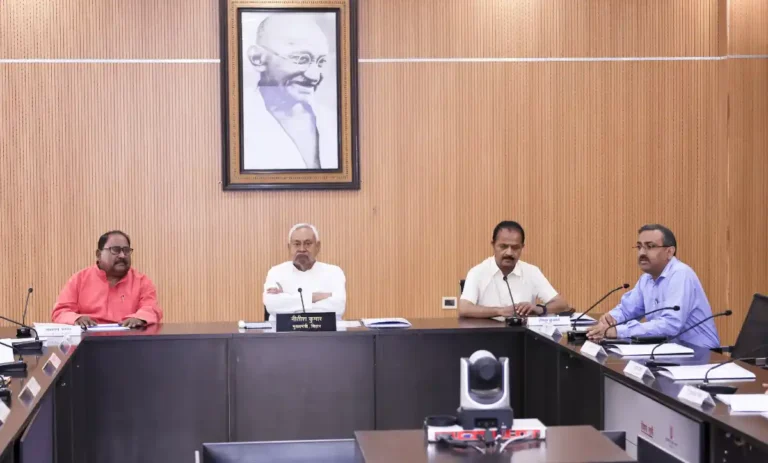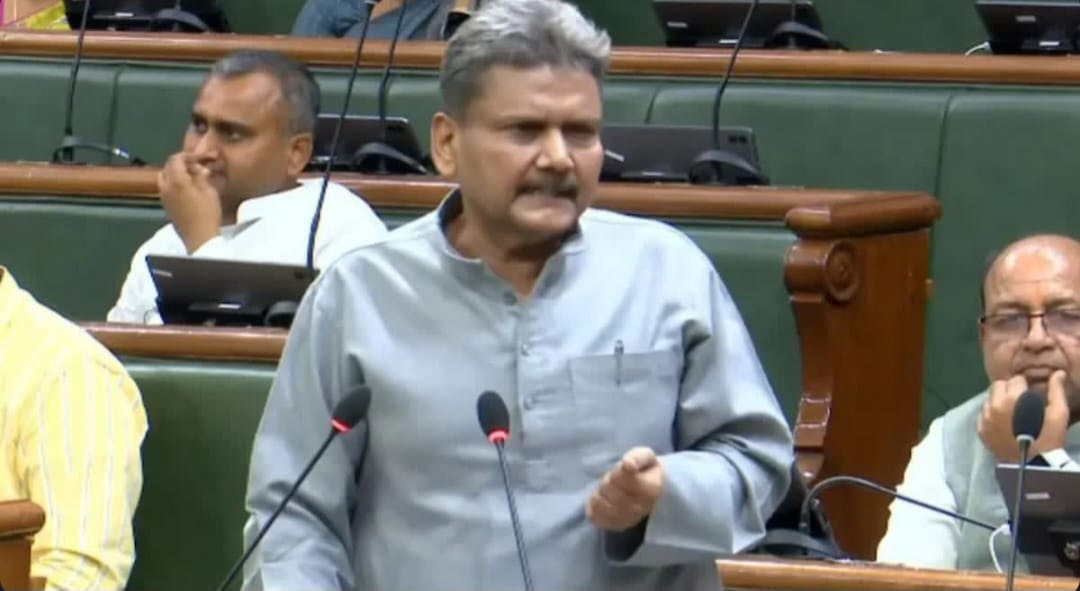
Bihar Education Minister Sunil Kumar
By Neeraj Kumar
Patna: During the Budget Session of the Bihar Legislative Assembly, the House on Thursday debated the Education Department’s budget. Education Minister Sunil Kumar tabled a budget of ₹60,204.60 crore for discussion. Opposition members accused the government of presiding over a decline in education standards and questioned the quality of education, before staging a boycott of the minister’s reply.
Responding to the criticism, Sunil Kumar said Bihar was spending more on education than the national average. He claimed the student–teacher ratio had improved significantly and that the dropout rate had fallen to below one per cent. The minister also clarified a recent incident in which a girl student was allegedly barred from appearing in the intermediate examination, saying he would personally look into the matter. He further offered an explanation regarding the academic degree of Ashok Choudhary
The minister said he had expected constructive suggestions from the Opposition. Under the Saat Nischay-3 programme for “Advanced Education, Bright Future”, the government was implementing wide-ranging reforms, he added. The education budget, which stood at ₹4,400 crore in 2005, has risen to ₹60,964 crore in 2025–26 and is pegged at ₹60,204.60 crore for 2026–27. Bihar’s education allocation now exceeds 14 per cent of the national average, he said, recalling that earlier the state suffered from a shortage of schools, poor infrastructure and a lack of teachers.
Addressing allegations over salaries, Sunil Kumar said that 5.87 lakh teachers receive their pay by the fifth of every month and there were no delays. He also highlighted Bihar’s bicycle scheme, claiming it had been adopted by other countries and had proved successful in Zambia and the Maldives.
Accusing the government of mismanaging education, Opposition members walked out of the House. The minister countered that in 2005 more than 12 per cent of children were out of school, a figure now reduced to less than one per cent. On staffing, he said the ratio had improved from one teacher for 65 students to one for 29. The number of universities in Bihar has risen to 15, with eight private universities—up from none earlier. Only two universities face session delays, while most are now on schedule, a change he credited in part to the Governor’s role.
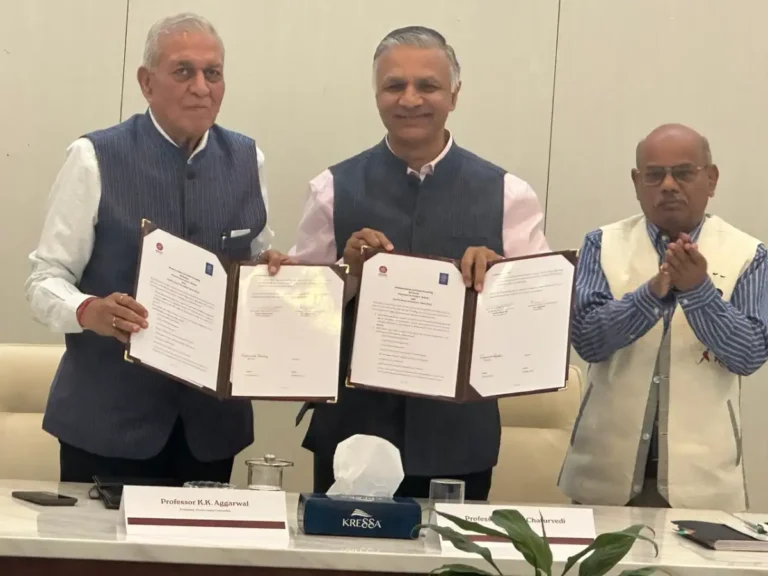
Looking ahead, Sunil Kumar said the future lay in artificial intelligence, adding that the Government of Bihar had signed an MoU in this regard. He announced that students would receive free education in Bihar’s engineering colleges.
Under the new budget, the Education Department has proposed establishing one model school in every block, with an allocation of ₹800 crore. A new Education City will be developed, while ₹200 crore has been earmarked to upgrade legacy institutions into Centres of Excellence. Over the next year, six lakh teachers will be trained.
Additionally, ₹210 crore will be spent on constructing new school buildings and ₹194 crore on repairs. Books and diaries worth ₹12.50 crore will be distributed to students from Classes I to VIII during the financial year. The government plans to recruit 45,000 teachers, including 7,000 for children with disabilities.
Former education minister Chandrashekhar questioned the government’s claims, urging members to examine the state’s own Economic Survey to understand the true condition of education in Bihar. He alleged large-scale student dropouts and criticised the minister’s response as emblematic of the government’s “good governance” narrative.
Chandrashekhar also took aim at an incident in which a student was barred from an examination for arriving three minutes late, demanding strict action against those responsible. Meanwhile, the AIMIM accused the government of neglecting Urdu by failing to recruit Urdu teachers. Party leader Akhtarul Iman said Bihar’s greatest asset was its human resources, yet the government had failed to invest adequately in them—resulting, he claimed, in the highest levels of migration.
About the Author