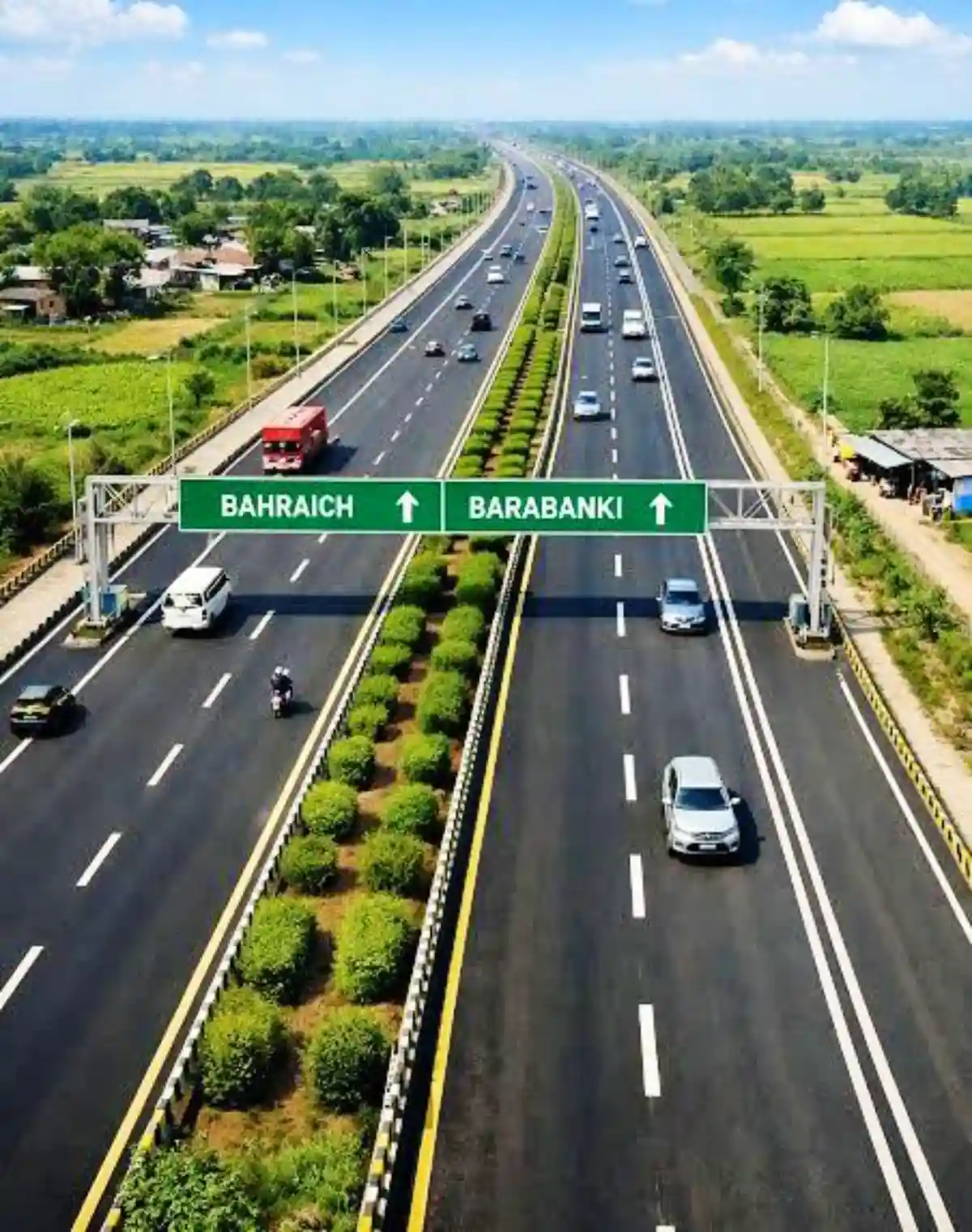
Barabanki–Bahraich Highway
New Delhi: The Barabanki–Bahraich section of National Highway-927 is poised to become a vital cross-border trade lifeline between India and Nepal, following the Union Cabinet’s approval for its four-lane, access-controlled development. The project is expected to significantly enhance connectivity to key trade points, boost commerce, and strengthen the already robust economic ties between the two neighbouring nations.
India and Nepal share one of South Asia’s most active land-based trade relationships, with India accounting for more than 60 per cent of Nepal’s total trade volume. This underscores the deep economic interdependence between the two countries.
The Cabinet’s approval for the construction of the 4-lane access-controlled Barabanki–Bahraich stretch of NH-927 is set to play a transformative role in strengthening bilateral trade. By improving connectivity to the strategically important Rupaidiha Land Port and the nearby Nepalgunj, the project is expected to boost cross-border commerce, support regional livelihoods, and enhance economic cooperation. Among various border points, the Rupaidiha–Nepalgunj route plays a pivotal role, handling the majority of exports from India to Nepal. With the new highway ensuring faster and more reliable connectivity, trade through this route is projected to grow substantially in the coming years.
Supporting Food and Agricultural Trade
A key feature of India–Nepal trade along this corridor is the movement of agricultural and food products. Trucks transporting rice, wheat, vegetables, dairy products, and livestock feed regularly move from Indian markets into Nepal, ensuring a steady supply of essentials. The highway project is expected to cut travel time by nearly 50 per cent, reducing the journey between Barabanki and Bahraich from around 150 minutes to 75 minutes, while increasing average speeds from 40 kmph to 80 kmph.
This reduction in travel time will help minimise spoilage of perishable goods such as vegetables and dairy products, directly benefiting farmers and traders on both sides of the border. Enhanced connectivity will also enable farmers across eastern Uttar Pradesh to access larger markets in Nepal, potentially increasing incomes and reducing post-harvest losses.
Ensuring Reliable Supply of Essentials
In addition to agricultural produce, the corridor facilitates the transport of essential supplies such as medicines and consumer goods, which are crucial for Nepal’s economy and daily life. Past disruptions at the border have highlighted the importance of seamless transport infrastructure. On several occasions, trade slowdowns led to hundreds of trucks carrying vegetables, fuel, and other goods being stranded, causing daily losses worth crores and impacting both traders and consumers.
With the development of a modern access-controlled highway, such delays are expected to reduce significantly, ensuring faster movement of goods and lowering transportation costs.
Boosting Logistics Growth
The improved road infrastructure will complement the expansion of logistics facilities at Rupaidiha, where daily truck movement is projected to rise considerably. This indicates strong growth potential in cross-border trade volumes and is expected to generate opportunities in warehousing, transport services, and logistics businesses along the corridor.
Transforming Border Communities
The most profound impact of the Barabanki–Bahraich highway is likely to be felt by residents of border districts such as Bahraich and nearby regions. Markets in towns around Rupaidiha depend heavily on cross-border customers, with several local businesses reporting that a majority of their sales come from Nepali buyers.
Improved highway connectivity is expected to create more business opportunities for traders, generate employment in transport and logistics, and drive growth in hotels, eateries, and small retail outlets. It will also enhance access to healthcare, education, and markets.
For truck drivers, farmers, and small traders, faster and more efficient roads will translate into higher earnings, reduced operational costs, and more stable income opportunities.
–With inputs from PIB
About the Author