Home is where we eat, sleep, relax, and spend time with family. It’s where children grow and develop. Because we spend so much time there, scientists say the home is one of the most important places to think about health.
Over the past decade, researchers have learned much more about the harms we’re exposed to indoors. They have also learned how to reduce some of these risks. The science has advanced. So have the tools for measuring what’s in our air, water, and dust.
“The home environment plays a powerful role in shaping health,” says Dr. Heather Patisaul, an environmental toxicology expert at NIH. “The good news is that there are simple, manageable steps people can take to lower common exposures.”
Chemicals in Everyday Products
Many everyday products in our homes contain chemicals that can be slowly released into the air or settle into dust over time. These include flame retardants in electronics and furniture, plastic additives, pesticides, dyes in fabrics, and PFAS. PFAS stands for a group of chemicals called perfluoroalkyl and polyfluoroalkyl substances.
“As building materials have evolved and we’ve shifted to newer construction standards, we’re introducing a lot more chemicals and a lot more plastics into our homes,” says Dr. Heather Stapleton, an environmental chemist at Duke University.
Flame retardants are chemicals added to products to slow the spread of fire. Years ago, certain flame retardants were widely used in couch cushions and other items in the home. Over time, research raised concerns about some of these older chemicals. Some were linked to problems with brain development and thyroid hormones.
Many of the older flame retardants have now been phased out, Stapleton says. But she adds that scientists continue to pay attention to newer flame retardants used in electronics and products, like home insulation.
Many products are now available without flame retardants, such as furniture, mattresses, and clothing.
Air, Dust, and Mold
One key way chemicals move through a home is by attaching to dust. “They’re very sticky,” Stapleton explains.
“They’re going to stick to particles that are in the air or in settled dust. So dust becomes a sink for these chemicals.”
Dust can especially affect children’s health. Kids spend more time close to the floor. They touch surfaces and often put their hands in their mouths, increasing exposure.
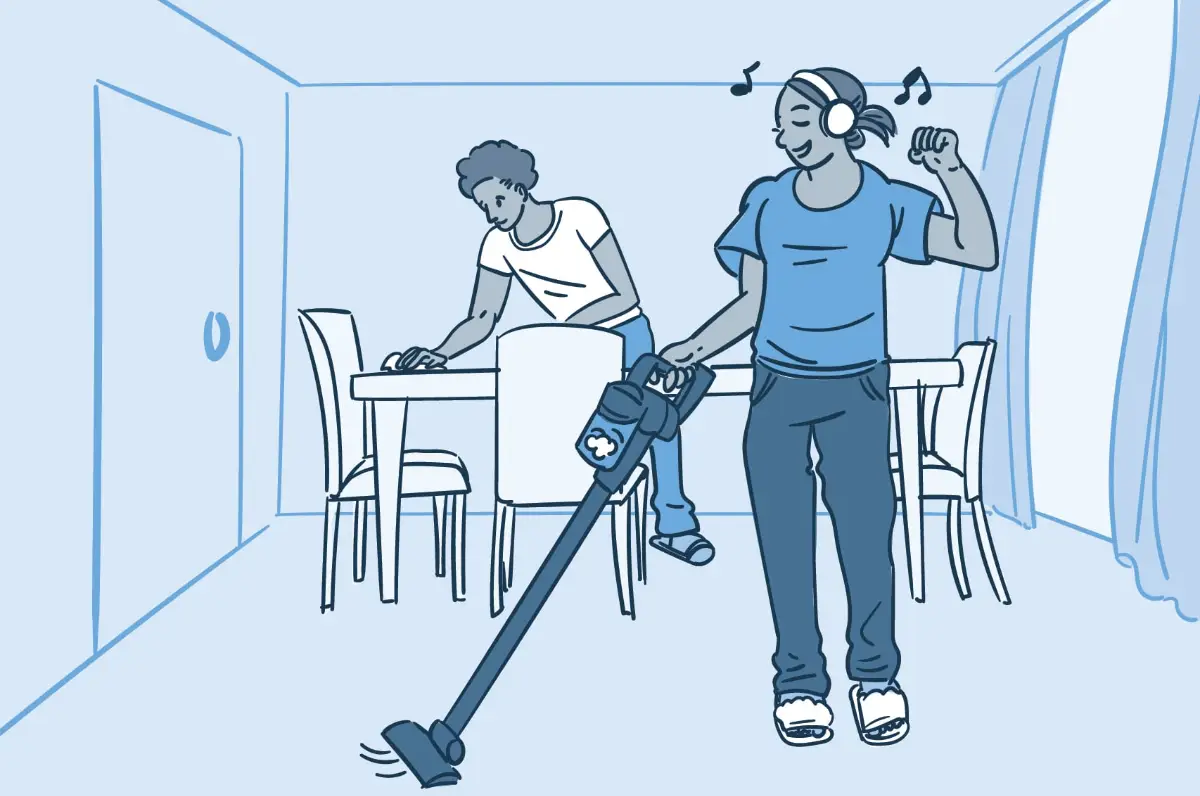
“Home hygiene plays a big role in reducing exposures coming from dust,” Patisaul says.
Stapleton’s NIH-funded work suggests that cleaning routines can make a difference. In her ongoing study, families are using a robotic vacuum on a set schedule at home.
After 10 weeks, Stapleton says her team saw exposure go down for many types of chemicals. This included flame retardants and plastic additives.
Cooking, smoking, pets, candles, cleaners, and building materials can all add harmful particles and gases to indoor air, too.
“If you burn something in your house, it’s going to release toxic chemicals,” she says. “What you need to do is ventilate it.” Ventilation means bringing in fresh air and pushing out stale air. Use a vent hood or open windows when possible.
Moisture indoors can also affect health because it can lead to mold. Mold is a fungus that grows on damp surfaces, such as around leaks or in humid bathrooms. It releases spores that can irritate the nose and lungs. So, it’s important to control moisture in the home.
Water Quality
Water quality is another important part of a healthy home. “It’s something that people are consuming frequently and directly, across the lifespan,” says Dr. Abby Fleisch, a pediatrician and environmental health researcher at MaineHealth.
Most public water systems in the U.S. are regulated and monitored for some contaminants like lead, arsenic, and pesticides, but not all. Drinking water levels of PFAS are monitored or regulated only in certain areas. And problems can still occur, especially with corroded pipes that can leach lead or other harmful chemicals.
Filtering your water can be an effective way to protect against contaminants. But be sure to check what the filters can be used for. Different filters protect against different contaminants.
Private wells are not regulated the same way. That means well owners should test their water regularly. Some contaminants, like PFAS, often have no taste, smell, or color.
“People need to do testing to be able to identify contaminants in well water,” Fleisch says. She adds that even small levels can matter because exposure can add up over time.
A recent report linked higher PFAS levels to higher cholesterol, lower response to some vaccines, higher risk of kidney cancer, and low birth weight in babies.
Fleisch stresses that exposure does not mean someone will get sick. “Having been exposed to PFAS doesn’t mean that a person is definitely going to develop a particular health outcome,” she says. She describes PFAS as a risk factor. That means it may raise the chance of some health problems, but it is only one part of the picture.
Build a Healthier Home
Experts say that you don’t need to make drastic changes all at once. Small steps, taken over time, can create a healthier home.
Fleisch points to an encouraging finding from her own NIH-supported research. In a large study, she looked at adults at risk for diabetes. People with higher PFAS levels were more likely to gain weight and develop high cholesterol or diabetes over time. But people who followed a program focused on healthy eating and regular exercise did not show this increased risk.
The lifestyle changes appeared to undo the health risk in the study. That’s an important takeaway.
“People shouldn’t feel overwhelmed,” Patisaul says. “They should feel empowered to ask questions and stay informed, so that they can make choices that support their families’ health.”
Wise Choices
About the Author