Ma Ganga
New Delhi: Thursday, April 23, 2026, is being observed as Ganga Saptami, also known as Ganga Jayanti, one of the most significant festivals in Hindu tradition.
Ganga Jayanti is celebrated on the auspicious day of Vaishakh Shukla Saptami, marking the divine origin of the River Ganga. Devotees across the country observe the festival with deep reverence and enthusiasm. Taking a holy dip in the Ganga on this day is believed to purify the soul and bring spiritual merit.
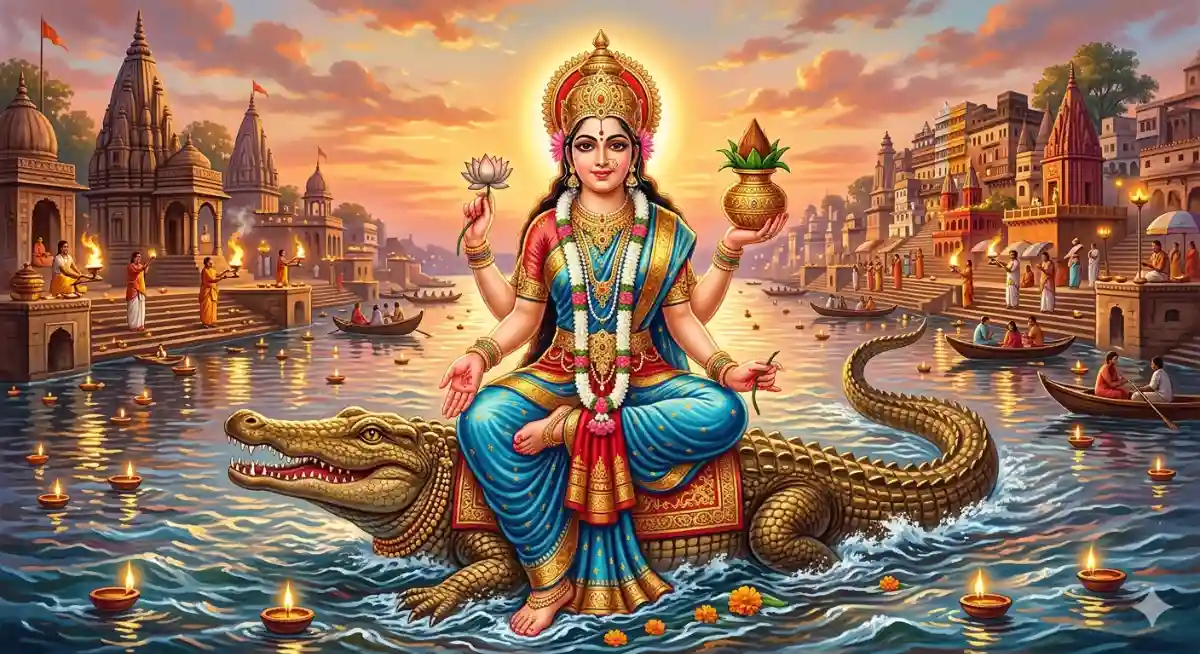
According to Hindu beliefs, the Ganga is not merely a river but a revered goddess. Numerous sacred pilgrimage sites are situated along its banks, and the river is regarded as the holiest among India’s rivers. It is widely believed that bathing in its waters absolves individuals of their sins. Many people wish for their last rites to be performed on its banks, and immersing ashes in the Ganga is considered essential for attaining salvation.
Ganga water, or ‘Gangajal’, holds a sacred place in Hindu rituals and is deemed indispensable in various ceremonies. It is often compared to nectar due to its purity. Several major festivals, including Makar Sankranti, Kumbh Mela, and Ganga Dussehra, are closely associated with the river, during which bathing, charity, and darshan (holy viewing) are considered highly auspicious. Large fairs are also organised along the river, promoting cultural unity across the country. Devotional texts such as the ‘Shri Ganga Sahasranam Stotram’ and the Ganga Aarti remain widely popular among devotees.
Mythological Significance
Ancient scriptures such as the Skanda Purana and the Valmiki Ramayana describe the origin of the Ganga. One legend states that the river emerged from drops of sweat from Lord Vishnu’s feet, while another suggests it originated from the kamandalu (water vessel) of Lord Brahma.
According to one belief, after liberating the world from the demon king Bali in his Vamana incarnation, Lord Vishnu’s feet were washed by Brahma, who collected the sacred water in his vessel. Another account narrates that when Lord Shiva sang before Narada, Brahma, and Vishnu, the divine music caused perspiration from Vishnu, which Brahma collected in his kamandalu, eventually giving rise to the Ganga.
Religious Importance
Scriptures state that on Vaishakh Shukla Saptami, the Ganga descended from heaven into the matted locks of Lord Shiva, which is why the day is celebrated as Ganga Jayanti or Ganga Saptami. The day marking the river’s emergence is observed as Ganga Jayanti, while its descent to Earth is commemorated as Ganga Dussehra.
On this occasion, devotees worship Goddess Ganga and perform rituals in her honour. According to the Puranas, the Ganga originated from Lord Vishnu’s toe and descended to Earth through the efforts of King Bhagiratha, who sought salvation for the 60,000 sons of King Sagara, who had been reduced to ashes due to the curse of Sage Kapila.
About the Author