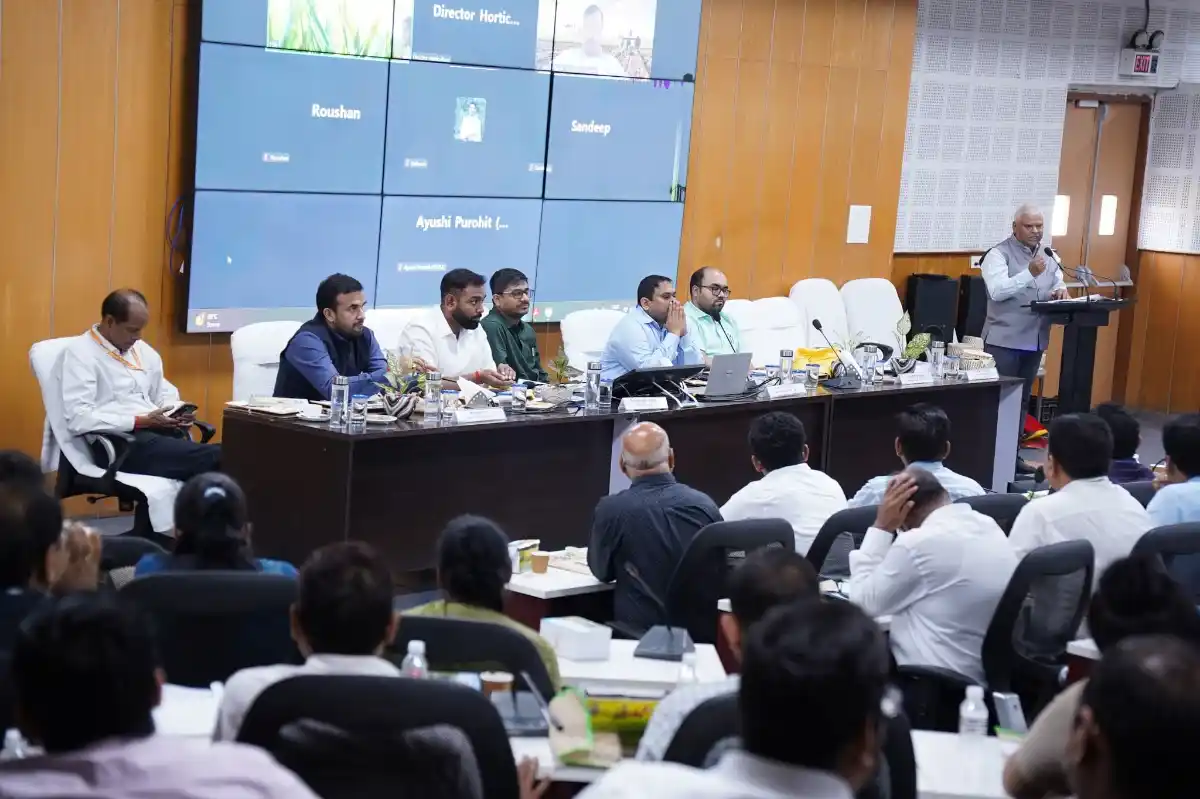
A high-level meeting on “PPP Model for Horticulture Planting Material Production in Bihar” was convened at the auditorium of Krishi Bhavan, Mithapur, Patna
By A Correspondent
Patna: A high-level meeting on “PPP Model for Horticulture Planting Material Production in Bihar” was convened at the auditorium of Krishi Bhavan, Mithapur, Patna, under the chairmanship of Principal Secretary, Agriculture Department, Bihar, Mr Narmdeshwar Lal. The meeting was organised by the Directorate of Horticulture, Agriculture Department, Bihar, and witnessed participation from a wide range of stakeholders, including departmental officials, state agricultural universities, scientists from the Indian Institute of Vegetable Research, experts, leading private seed companies, FPOs and nursery operators.
Mr Narmdeshwar Lal emphasised that the timely availability of quality seeds and planting material forms the foundation for enhancing productivity, quality, farmers’ income and overall horticultural development in the state. He noted that challenges such as shortage of quality material, dependence on other states, pricing issues, lack of stability and traceability increase farmers’ costs and limit production potential.
He further stated that a robust, transparent and sustainable production system must be developed to ensure the availability of quality seeds and planting materials. Bihar, he said, should evolve from being merely a consumer state into a producer of high-quality horticultural seeds and planting materials.
Special Secretary, Agriculture Department, Bihar, Mr Birendra Prasad Yadav, said that the suggestions received during the meeting would be compiled to prepare a practical and effective action plan. This, he added, would help establish a self-reliant supply system for quality planting material for vegetables, spices and other horticultural crops in the state.
Director of Horticulture, Bihar, Mr Abhishek Kumar, highlighted that over 80 per cent of horticultural planting material in Bihar is sourced from outside the state, resulting in higher costs for farmers due to transportation expenses. He added that more than 300 nurseries and over 60 agricultural farms under the Agriculture Department have been strengthened with infrastructure, where PPP-based production of vegetable seeds and planting materials can be undertaken.
During the discussions, detailed suggestions were received on key aspects such as a PPP-based “hub-and-spoke” model, upgradation of local nurseries, the seed village concept, adherence to quality standards, and digital tracking with transparency. There was also consensus on prioritising farmers’ interests, ensuring timely supply and maintaining quality assurance.
Among those present were Agriculture Director, Bihar, Mr Saurabh Suman Yadav; Managing Director of Bihar State Seed Corporation, Mr Sparsh Gupta; Director, Bihar State Seed and Organic Certification Agency (BSSOCA), Mr Santosh Kumar Uttam; representatives of private seed companies; scientists from Bihar Agricultural University, Dr RPCAU, and the Indian Institute of Vegetable Research, Varanasi; along with other senior departmental officials.
About the Author