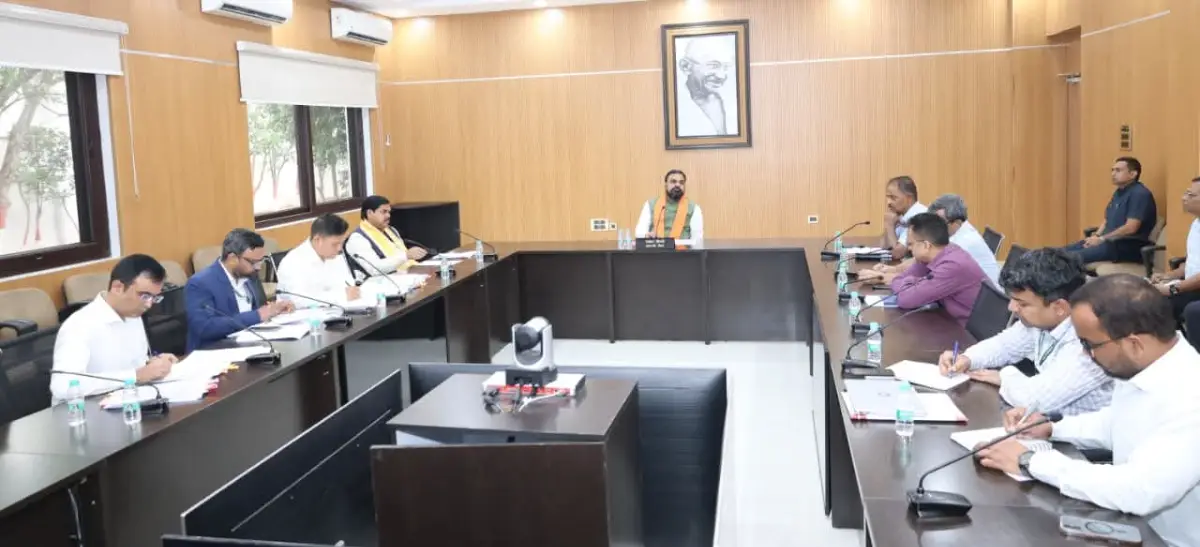
Bihar Chief Minister Samrat Choudhary chaired the review meeting on Education Department.
By A Correspondent
Patna: The Bihar Government has announced a series of major initiatives aimed at strengthening the state’s education system, following a high-level review meeting of the Education Department chaired by Chief Minister Samrat Choudhary on Friday.
Emphasising the government’s commitment to ensuring quality education for every child in the state, the Chief Minister said continuous efforts are being made to improve access, infrastructure, and teaching standards across Bihar’s schools.
One of the most significant decisions taken during the meeting was the plan to recruit one lakh (100,000) teachers over the next five years. Under this initiative, at least 20,000 teachers will be appointed annually, providing a steady boost to the state’s teaching workforce. The Education Department has been directed to issue recruitment advertisements every year in July to streamline the hiring process and maintain consistency.
In a move aimed at improving administrative transparency and teacher satisfaction, the government has also proposed a new transfer policy for teachers. The department has been instructed to frame guidelines that will make transfers more transparent and convenient. As per the proposal, female teachers may be posted as close as possible to their home panchayat within their home district, while male teachers may be transferred to blocks adjacent to their home block within the district. This is expected to reduce commuting challenges and enhance work-life balance for educators.
The meeting also focused on improving the delivery of student welfare schemes. The government has directed that school uniforms for students across all state-run schools will be supplied through the “Jeevika” programme, run by Bihar Rural Livelihoods Promotion Society. This approach is expected to ensure the timely distribution of uniforms while simultaneously promoting women’s economic empowerment through local self-help groups.
Officials believe these measures will not only strengthen the quality of education but also create employment opportunities and improve governance within the education sector.
The decisions reflect the state government’s broader push to modernise education and make it more inclusive, efficient, and responsive to the needs of both students and teachers.
About the Author