Bihar Agriculture Minister Vijay Kumar Sinha
By Neeraj Kumar
Patna: In a major step towards promoting scientific agriculture and connecting the younger generation with modern farming techniques, the Bihar government has decided to establish mini soil testing laboratories in 629 PM SHRI and government schools in the upcoming financial year.
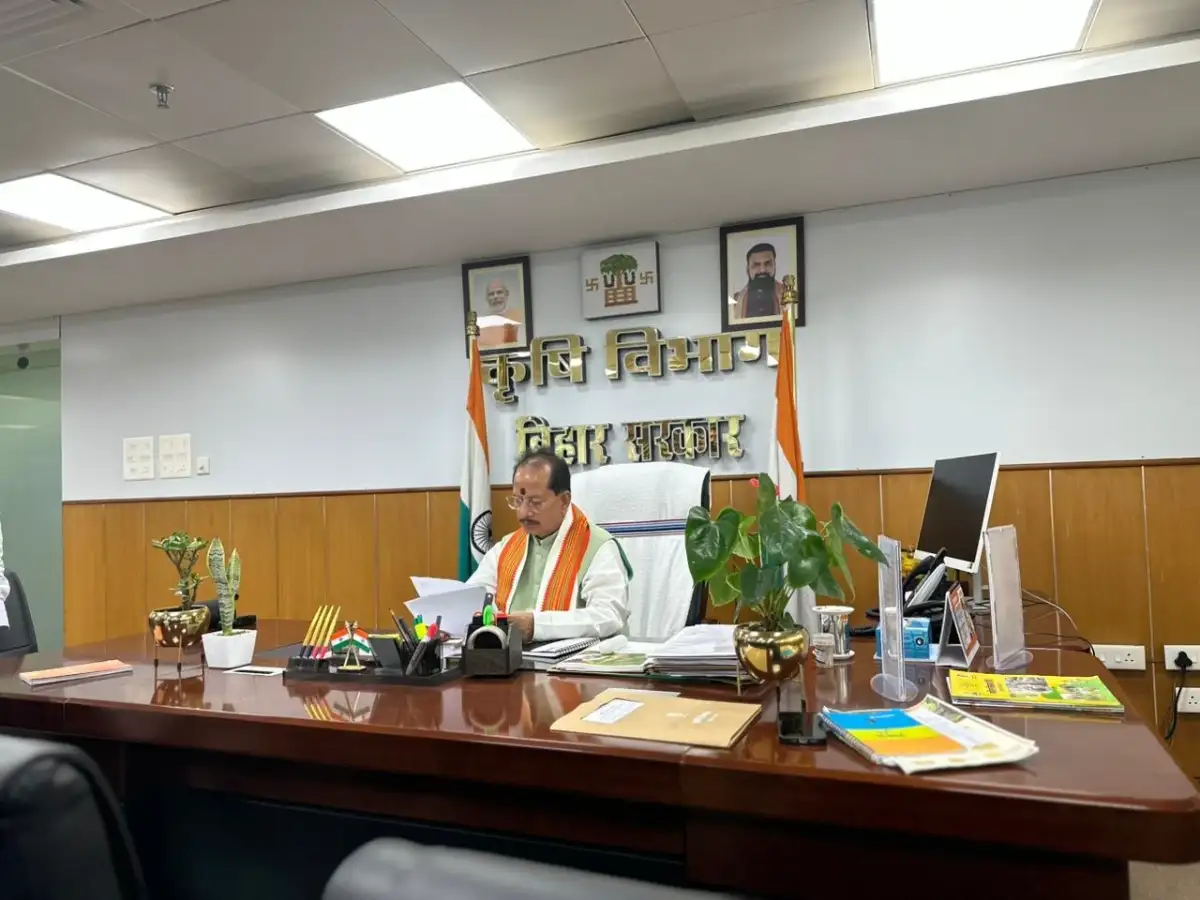
Through these laboratories, school students will learn the scientific process of soil testing, while farmers will gain easier access to information about the fertility and nutrient status of their land. Bihar Agriculture Minister Vijay Kumar Sinha approved the scheme during a review meeting held at Krishi Bhavan and directed officials to expand it on a wider scale.
During the review meeting of the Agriculture Department, the progress of programmes under the Soil Health and Fertility Scheme and the Chief Minister Horticulture Mission was assessed. The minister stated that promoting modern technology and scientific thinking in agriculture is a key priority of the government. He said that introducing students to soil testing and agricultural science at the school level would help create a trained and aware workforce for the future.
Officials informed the meeting that during the financial year 2025–26, mini soil testing laboratories had already been set up in 160 PM SHRI and government schools under the School Soil Health Programme. Encouraged by the positive outcomes of these laboratories, the government has now decided to expand the initiative on a larger scale. Under this plan, new laboratories will be established in 629 schools across the state in 2026–27.
The Agriculture Minister said that students of Classes 7, 8, 9, and 11 will participate in collecting soil samples, conducting tests, and engaging in practical activities related to soil health. This will help develop a scientific outlook among students and improve their understanding of agriculture and environmental issues. It will also promote research-based and experiential learning.
He further stated that setting up each mini soil testing laboratory will cost approximately ₹1 lakh. Of this, 60 per cent will be borne by the Central Government and 40 per cent by the State Government. The Government of India has set a target of collecting and testing 50 soil samples per school. After testing, farmers will be provided with Soil Health Cards, enabling them to use fertilisers based on the actual needs of their land.
This initiative is expected not only to provide practical education to students but also to offer scientific guidance to farmers for balanced fertiliser use. It may help reduce cultivation costs and increase productivity. A new model of coordination between schools, students, and farmers is likely to emerge, which will play a significant role in enhancing agricultural awareness in rural areas, he said.
During the meeting, the minister also reviewed the Dragon Fruit Development Scheme being implemented under the Chief Minister Horticulture Mission. He said the scheme is being carried out based on a Detailed Project Report (DPR) prepared under the Fourth Agriculture Road Map. The project has been approved with a cost of ₹3 crore for the past three financial years.
Out of the approved allocation of ₹60 lakh for the financial year 2026–27, an expenditure and withdrawal of ₹13.62 lakh has also been sanctioned. The minister emphasised that promoting high-value crops like dragon fruit can significantly increase farmers’ income. He added that the state government is consistently working towards crop diversification, expansion of horticulture, and the adoption of modern agricultural technologies.
About the Author